

2,000+ Zionist attacks and incidents in 25 Days
Mapping zionism’s multi-front campaign

Introduction
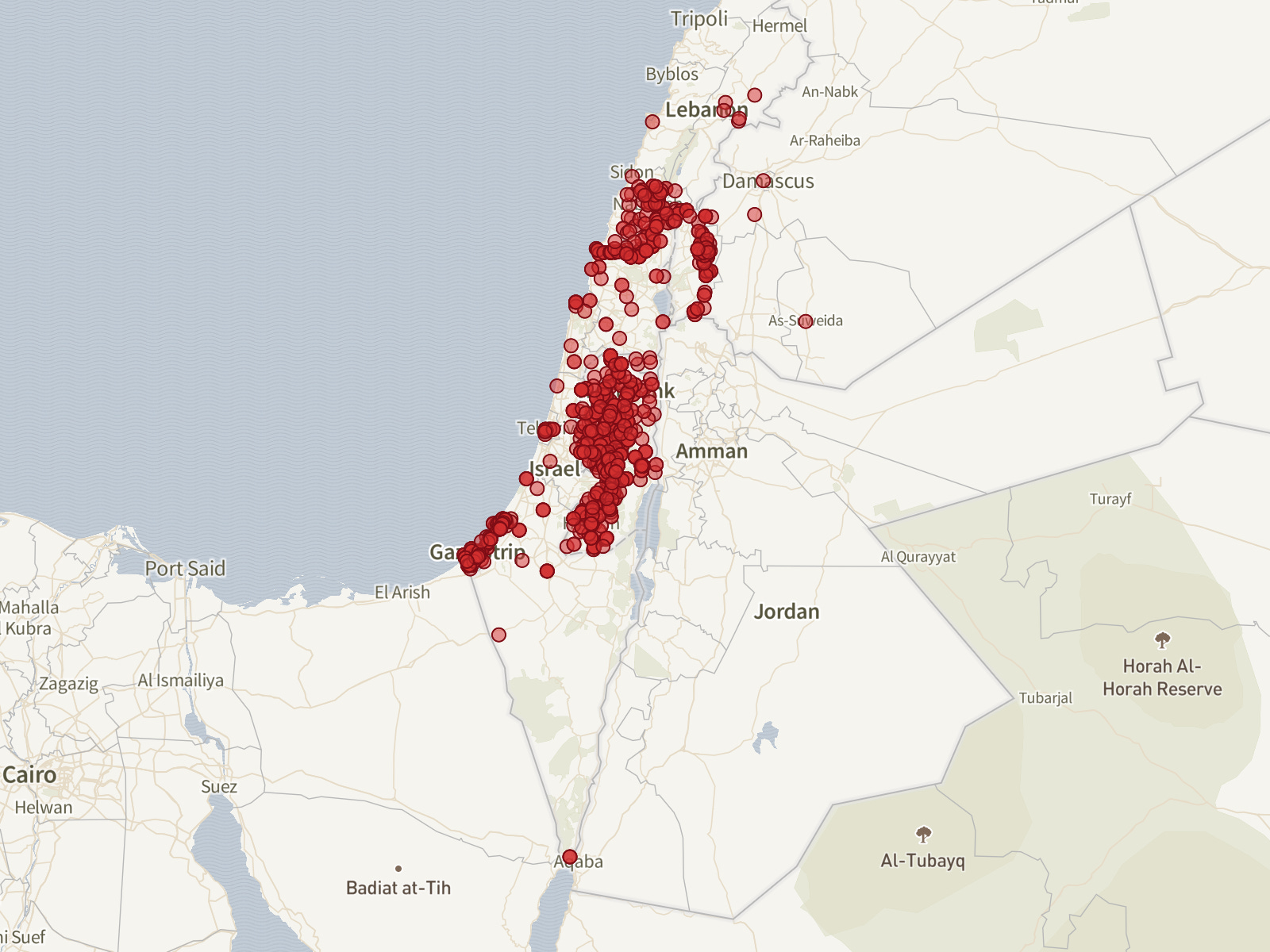
Sixty attacks and incidents a day. Every day. For 25 days straight. Between November 18 and December 12, 2025, nearly 1,500 violent incidents were recorded across four territories — Gaza, Lebanon, Syria, and the West Bank as a direct result of zionist aggression. At least 223 people are confirmed dead, though the true number is almost certainly higher. A ceasefire in Gaza, in effect since October 10, has done little to slow the killings.
These developments unfold within a broader geopolitical context wherein military interventions in the Global South continue to serve the strategic and economic interests of the United States and its partners. Resource extraction, territorial control, and the maintenance of regional influence remain central drivers of violence. The humanitarian toll — overwhelmingly borne by the indigenous populations, particularly those who have resisted imperialism and zionism — reflects the human cost of these dynamics, as communities across the region face displacement, infrastructure destruction, and the systematic erosion of basic services. This brief summary of this 25-day data set underscores that zionism, contrary to public narratives, is inherently a product of imperialism and capitalism.
Gaza Strip
The Gaza Strip recorded 385 incidents during the reporting period, resulting in 164 documented fatalities — the highest casualty count among all regions monitored. Explosions and remote violence accounted for 295 events, whereas strategic developments (including property destruction and military positioning) accounted for 73. These operations continued despite the ceasefire agreement, with Israeli forces maintaining active military pressure throughout the territory.
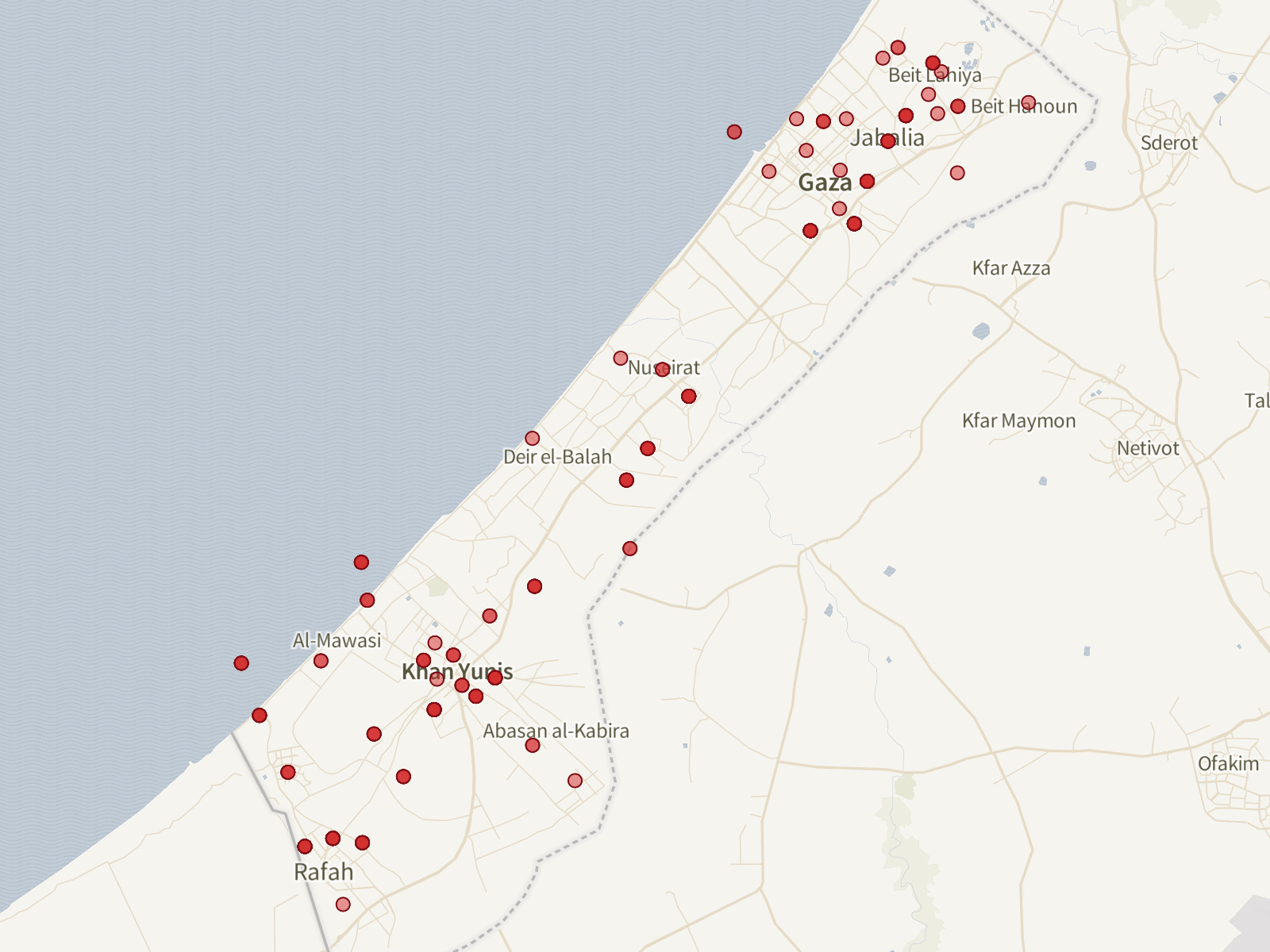
November 22, Al Nuseirat Camp Airstrike: Israeli warplanes struck a residential area near Al Awda Hospital, killing 17 people in what became the deadliest single incident of the reporting period. The strike was described as a response to an earlier incident targeting Israeli forces. Multiple locations across Gaza City were struck simultaneously, reflecting a coordinated military response that included civilian areas.
November 19, Al Awqaf Building Strike
An Israeli airstrike on a building sheltering internally displaced persons in Gaza City’s Al Zaytun neighborhood killed 10 people, including 5 men, two women, and three children. The strike targeted a structure being used as an emergency shelter for those displaced by ongoing hostilities. The routine and systematic targeting of displaced people is one of the key indicators of the broader zionist movement’s intent to erase an entire people.
December 3, Al Mawasi IDP Camp Attack
Israeli warplanes struck tents housing displaced families in Al Mawasi, Khan Yunis, killing five people — including two children — and wounding dozens more. Al Mawasi had been designated a humanitarian zone, raising concerns about the protection of civilian safe areas. It has also been struck multiple times since October 7, 2023.
(Bilal, 8. Mohamed, 10. Ghada, 46. Israa, 30. Fathi, 36. Five members of the Abu Hussein family were killed when Israeli forces struck displacement tents in Al Mawasi, Khan Yunis.)
Ongoing Tunnel Operations in Rafah
Throughout November, multiple incidents involved Palestinians emerging from tunnels in eastern Rafah. Israeli forces conducted repeated strikes on tunnel exits, resulting in dozens of casualties. On November 28 alone, 9 Palestinians were killed in one such operation, with their bodies recovered days later.
West Bank and “Israel”
Over this period, the historical Palestinian territories (excluding Gaza) had 1,176 incidents with 183 fatalities. This region exhibited the most diverse range of event types: 397 riots, 315 explosions and remote violence incidents, 232 strategic developments, 141 acts of violence against civilians, 70 protests, and 21 battles. The data reflects not only ongoing military operations but also sustained civil unrest, settler violence, and political tensions within Israeli society itself.
November 27, Jenin Extrajudicial Killing
Video footage captured Israeli border police shooting and killing two Palestinian men — Al-Muntasir Abdullah, 26, and Youssef Asasa, 37 — after they had surrendered during a military raid in Jenin.
(Al-Muntasir Abdullah, 26, and Youssef Asasa, 37, shot and killed by Israeli border police in Jenin—after they had surrendered. The killings were captured on video.)
The footage, broadcast on Palestinian and Egyptian television, showed the men emerging with their hands raised, lifting their shirts to demonstrate they were unarmed, and kneeling before soldiers. They were then ordered back into the building and shot. The Palestinian Authority condemned the killings as an “extrajudicial execution in cold blood,” while the UN Human Rights Office called it a “summary execution.” The Israeli military acknowledged that the fire was “directed toward the suspects” after they exited the building and said the incident was “under review.”
Settler Violence in the West Bank
Violence by Israeli settlers against Palestinians in the occupied West Bank has intensified during the 2025 olive harvest season. On November 23, 20-year-old Birzeit University student Baraa Khairi Ali Maali was killed by Israeli forces in Deir Jarir village after settlers attacked homes on the village outskirts — the third fatality during settler attacks in the area in recent months. Three days earlier, settlers torched a vehicle scrapyard in Huwwarah, destroying an estimated 150 cars — the attack occurring the same evening Prime Minister Netanyahu convened a security meeting on settler violence. Throughout mid-November, settlers carried out repeated attacks on olive farmers, beating harvesters, spraying them with pepper gas, and vandalizing trees across villages near Nablus and Ramallah. The UN reports 757 settler attacks in the first half of 2025 — a 13% increase over the prior year — with over 4,000 olive trees vandalized this harvest season alone.
Lebanon
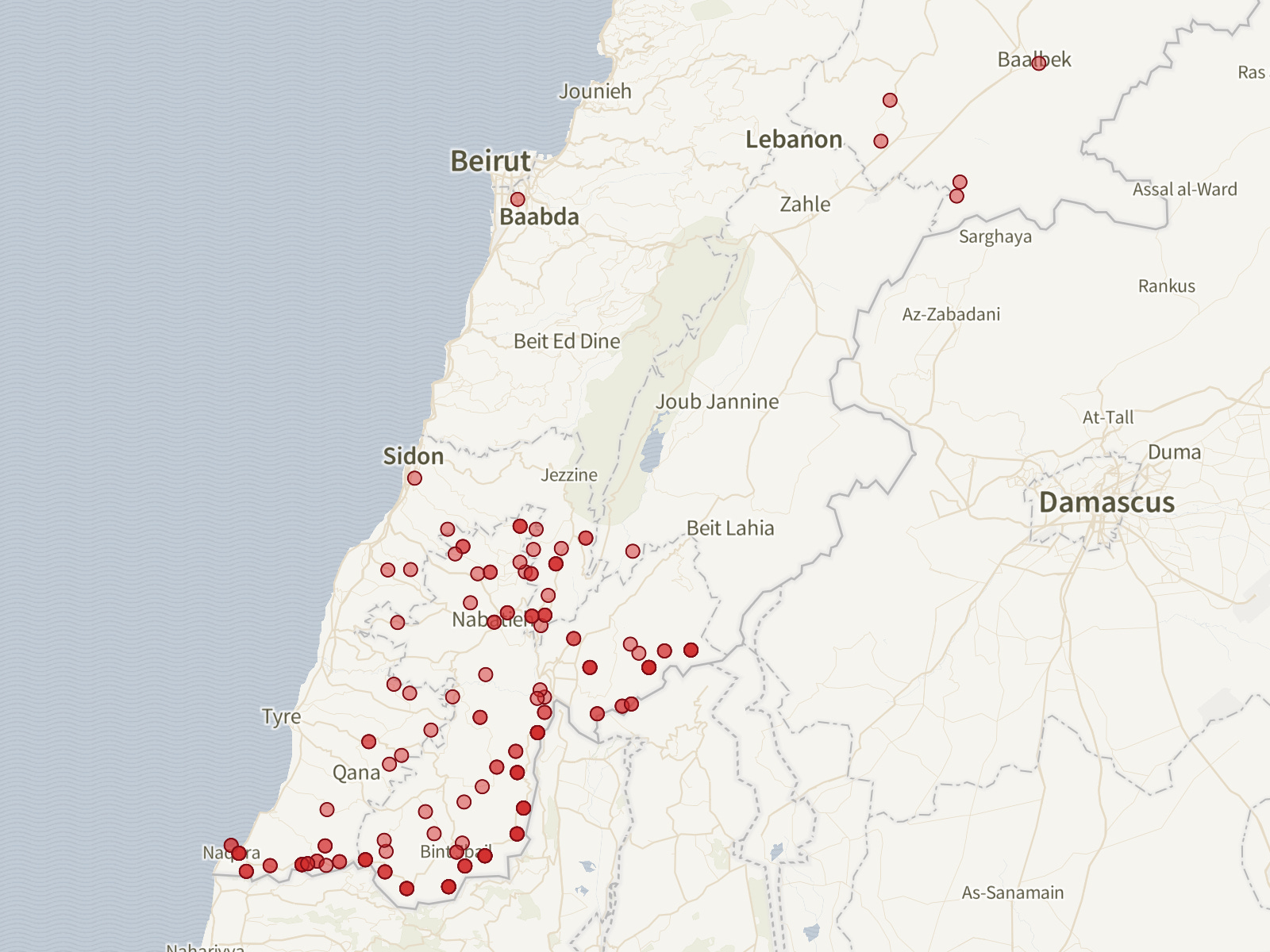
Lebanon documented 205 incidents with 25 fatalities during the reporting period. Despite a November 2024 ceasefire agreement, Israeli military operations have continued on an almost daily basis. The data recorded 158 explosions and remote violence events, alongside 47 strategic developments — such as Israeli forces deforesting areas, destroying homes and wells and confiscation of lands. The United Nations has documented over 127 civilians killed in Lebanon since the ceasefire took effect, underscoring the imperialist nature of zionism.
November 18, Ein el-Hilweh Refugee Camp Massacre
The deadliest single attack in Lebanon during the reporting period occurred when an Israeli drone struck a car park near a mosque in the Ein el-Hilweh Palestinian refugee camp, killing 13 people and wounding nearly 70. The victims included young men who were reportedly using a nearby sports field. The Israeli attack on Lebanon’s largest Palestinian refugee camp is home to approximately 80,000 people in 1.5 square kilometers.
November 23, Assassination of Hezbollah’s Chief of Staff
Israel struck a residential building in Beirut’s Haret Hreik neighborhood, killing Haytham Ali Tabatabai. Twenty-eight people were wounded. This was the first Israeli strike on Beirut since June 2025 and the highest-profile assassination since the ceasefire. The strike signaled Israel’s intent to continue attacks against the Lebanese population regardless of diplomatic agreements.
Systematic Targeting of Municipal Workers
A disturbing pattern emerged of strikes targeting individuals Israel claimed were Hezbollah members but who held civilian municipal positions. On November 19 in Al Tiri, a strike killed the town’s municipality treasurer and wounded 11 others, including students on a passing school bus. Similar incidents in Wadi Saluki and Bint Jbeil claimed the lives of other local government workers. This is why the Western framing of the “war on terrorism” is so critical: by turning an entire population into terrorists, there are truly no innocent people.
Syria
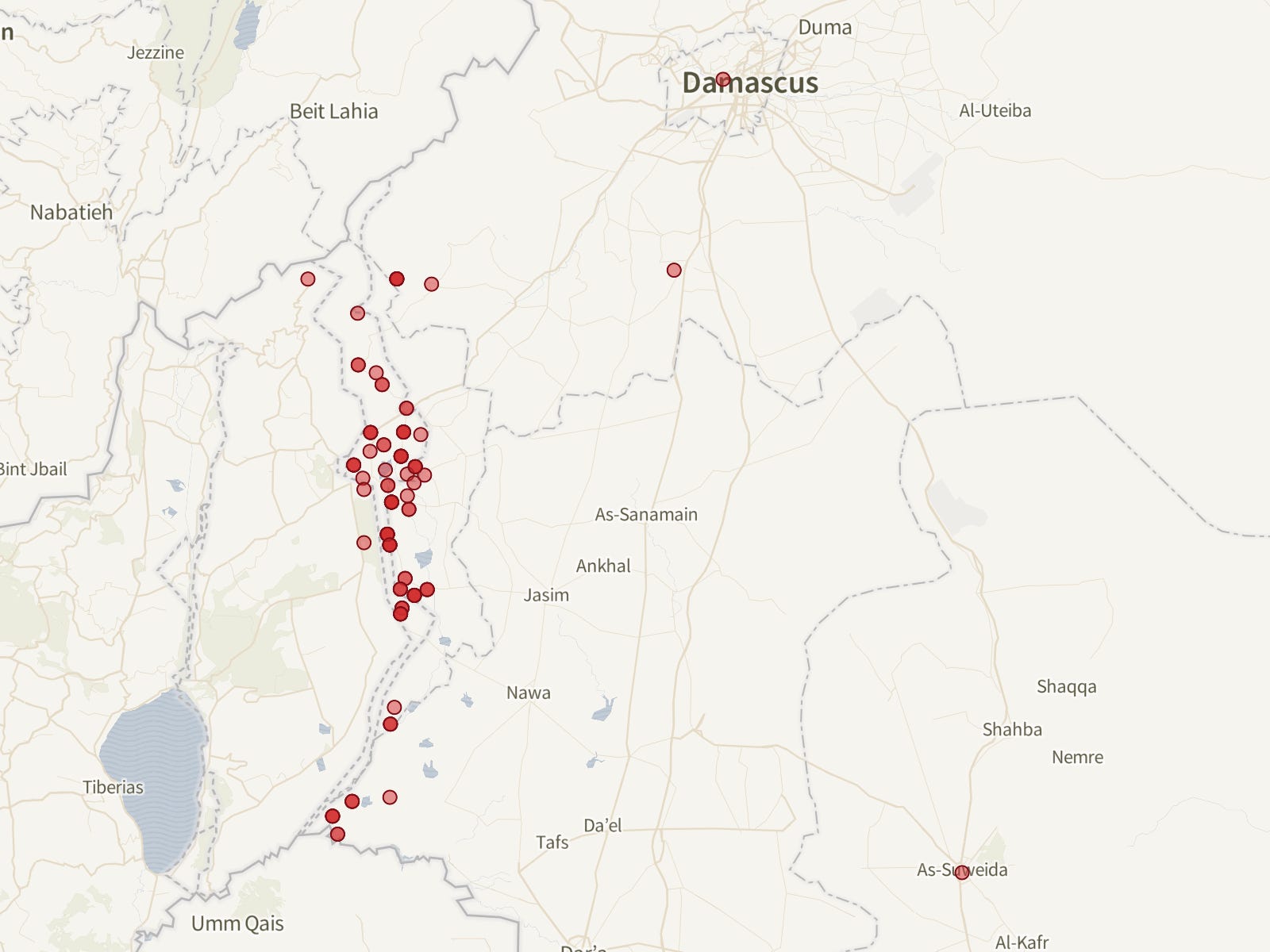
Syria recorded 117 incidents with 15 fatalities. The majority (99 events) were strategic developments, primarily Israeli military movements into Syrian territory. Since Assad was removed in December 2024, Israel has significantly expanded its presence in southern Syria, establishing checkpoints, conducting patrols, and carrying out raids deep into Syrian villages. By December 2025, the Armed Conflict Location and Event Data project reported that Israel had conducted over 600 attacks in Syria since the invasion began—averaging nearly two per day.
November 28, Beit Jinn Raid and Massacre
In the deadliest Israeli attack in Syria since the occupation of southern Syrian territory, Israeli forces raided the village of Beit Jinn in the Damascus countryside, ostensibly to detain suspected militants. When residents confronted the incursion, clashes erupted. Israel then called in airstrikes, killing 15 people — including two children and members of a family celebrating a wedding the day before. Five members of the Hamadeh family died, including 4- and 10-year-old grandsons. Syria’s Foreign Ministry condemned the attack as a “war crime” and a “horrific massacre.” Six Israeli soldiers were wounded, three seriously.
Israeli Settler Incursions
On November 27, Israeli settlers from a group called “Bashan Pioneers“ entered Syrian territory near Beer Ajam village and Mount Hermon, attempting to seize uninhabited homes. IDF forces eventually detained and returned the settlers to Israel, but the incident highlighted the expanding settler movement’s interest in Syrian territory.
Construction of Separation Infrastructure
On December 8, Israeli forces began constructing a separation wall extending approximately 80 kilometers along the Syrian-Jordanian border, formalizing territorial control over occupied Syrian land and creating permanent facts on the ground.
Conclusion
The data from this reporting period (November 18 – December 12, 2025) reveals a region under sustained western imperialist violence waged through the zionist movement. The impunity that Israel has been granted has ensured that ceasefire agreements fail to provide meaningful protection to Palestinians. The 1,498 documented incidents and 223 fatalities represent only the verified toll; the actual humanitarian cost is undoubtedly higher. Across all four regions, patterns emerge of attacks on protected sites — hospitals, refugee camps, residential buildings — alongside the systematic targeting of infrastructure and community leaders. The expansion of territorial control, whether through buffer zones in Syria or military positioning in Gaza, reflects strategic imperialist objectives that supersede humanitarian considerations or adherence to international law. These dynamics continue to reshape the region’s political geography while extracting an immense human toll from communities with the least power to resist or escape the violence.