

A Reckoning with Nothing
The Economist’s Steavenson promises accountability and delivers propaganda.

More Pity for Genocidaires
Wendell Steavenson’s article for The Economist1, “What I did in Gaza: an Israeli soldier’s reckoning” came out a few days ago. From many, the public response has been mockery: once again, we are subjected to the not-very-deep-or-reflective thoughts of yet another shooting and crying genocide participant. The respondents are not wrong — not even close — and my cynical prediction is that we will continue to see more of these types of articles as zionist soldiers face growing international disdain and consequences for their participation in genocide when they travel abroad.
A few months ago, while the author was in occupied Palestine carrying out this research, we met by chance in Bethlehem. I didn’t know of her or her work. It was a pleasant meeting until she explained what she was doing here and that she was carrying out an interview with a zionist soldier about his experiences in Gaza, facilitated through Breaking the Silence (BTS), which had to be anonymized to the point that even a fellow soldier in his unit would not be able to identify the interviewee. At that point, I told Steavenson that she was not engaged in investigative reporting, as anything her interviewee might offer has been revealed first and in greater detail by Palestinians in Gaza. Instead, what she was doing (and has now done) is attempt to rehabilitate the reputation of soldiers guilty of participation in a genocide. These are soldiers who are just beginning to face the deserved consequences of their actions through the advocacy of organizations like the Hind Rajab Foundation, which do not allow them to travel abroad without the potential of legal consequences. She gave no thoughtful reply. I left immediately after that. By chance, I came across her article while it was circulating on social media over the last few days.
The violence of Steavenson’s article goes much deeper than an attempt to rehabilitate one Israeli soldier, given the pseudonym “Jonathan” — and, through him, zionist society — by way of a series of anonymized recollections on his participation in war crimes. The crime of which I find Steavenson and The Economist guilty is the banal violence of framing, which serves genocide through the erasure of Palestinians and Palestinian experiences, rather than resisting it; Steavenson not only describes all of these crimes through a thoroughly zionist framing, but implements the rhetorical terms of genocidal violence herself. Despite the fact that the article is presented as a “reckoning”, implying new insights following many serious, prolonged, lethal acts of wrongdoing against a captive population of millions, every sentence of the piece is used to soften the crimes to which it alludes, placing them in a sympathetic context to explain the anonymous soldier’s actions rather than repudiate them. The dehumanization of Palestinians, inherent to Israel’s genocide, is not rejected by the piece but rather maintained and strengthened through it, encouraging its readership to see Palestinians as inhuman animals, too. Worse yet, the author allows the audience not to see Palestinians at all.
The banality of the violence in this choice of framing by Steavenson and The Economist doesn’t diminish the degree of rhetorical and symbolic violence in this article, but rather indicates its lack of originality. It is not novel to point out that Western media in general have served as stenographers for genocide in Gaza, repeating the statements of Israeli spokespeople and politicians as facts, announcing claims for which there is no evidence, and placing undeserved doubt on vital reporting by Palestinian journalists, institutions, organizations, and laypeople. But perhaps it is even more insidious to reinforce Israeli framing of this genocide while claiming to be “reckoning” with the war crimes carried out against Palestinians in Gaza, simultaneously evoking sympathy for the perpetrators while erasing the subjectivity and humanity of the victims.
For most of us who have long abandoned Western media as a source of news, this style of reporting is no surprise. Still, because this phenomenon is not likely to disappear soon and many of our communities or international allies are inundated with it or affected by it, it is important to unpack how this attitude and rhetoric operate, presented as “neutral” reporting and quietly influencing the way readers think about this genocide. One could go line by line through a piece like this to break it down, but this article will focus on a few themes across the piece: its thoroughly zionist stance and framing, its erasure and obscuration of Palestinians, and its focus on rehabilitating perpetrators of genocide.
zionist Framing as the Default
Steavenson’s first sentence reveals her framing. She writes, “Jonathan was doing national service in an infantry platoon when Hamas broke through the Gaza perimeter fence on October 7th 2023, killing 1,195 people and taking more than 200 hostages.”
Steavenson begins her article on October 7, 2023 and not a moment before. She doesn’t describe Gaza as a besieged, tiny enclave of Palestinian territory within the larger context of occupied and colonized Palestine, and she doesn’t give any hint of what might have led up to this moment in history. The only hint she provides about the conditions in Gaza at the time is in her reference to the six-meter (twenty feet) high wall enclosing the 2.3 million Palestinians there as a “perimeter fence”. For anyone who has seen the wall surrounding Gaza in person, “perimeter fence” is not the first term that comes to mind. This is particularly true for those who understand the purpose of the “fence”: enclosure, imprisonment, concentration of a population whose diet, access to basic needs, and every movement is highly controlled and scrutinized by Israeli overseers from just outside that very “fence”. This barrier, constructed under the guise of security, carries out these functions not simply out of racialized hatred, but because it supports the monetization of violence against Palestinians by Israel’s multipronged colonial management regime (permits, imports, weapons testing), serving the interest of an international capitalist class. For those who know what this structure is made to do, particularly those for whom words are a career, a more appropriate term for both the Gaza Strip and the artificial border imposed around it by Israel is “concentration camp”.
But it is not only that Steavenson does not begin with any context about Gaza or Palestine which might explain what led to October 7, 2023 — she chooses to begin her article in the settlements placed around Gaza reinforcing its enclosure, the “Gaza Envelope”. She says that there, “Hamas… kill[ed] 1,195 people”. This number reflects the data available about the total number of Israelis killed on October 7, 2023 — not the total number killed, or even expected to have been killed, by Palestinian resistance groups. It is well-known and accepted, even among Israelis, that the zionist military was responsible for the killing of some Israelis on October 7, 2023, although there is no conclusive data about this as the Israeli government has precluded any independent investigation. If Steavenson is aware of this, she does not make her audience aware, but falsely attributes all of the deaths to Hamas against even Israeli testimony.
This choice sets the tone for the rest of the article. While the piece is presented as a challenge to the dominant Israeli government, military, and media narrative of the “war”, Steavenson’s framing of the aggression against Gaza is always situated within, or placed next to, the claims propped up by these very bodies. Steavenson names BTS as her collaborators in organizing the interview with the anonymous Israeli soldier around whom she builds the narrative, and notes that BTS’s testimony is directed against “the entire system”. Nonetheless, Steavenson includes, without any commentary, the complete responses of an “IDF spokesman” no less than five times across this 3,100 word article, for a total of five paragraphs. This is a bizarre choice for an article ostensibly about revealing the crimes of this very institution. If the point of the article is to challenge hegemonic assertions that the Israeli military is not engaged in war crimes and to challenge these systems, why include the hegemonic assertions of the Israeli state?
But Steavenson and The Economist are clearly not really interested in challenging the claims of the Israeli military. Although the article quotes BTS’s executive director as saying, “It’s the entire system… It is systematic crimes that we are doing”, nowhere other than the lead up to that quote does Steavenson use the phrase “war crimes” to identify or describe the policies for which her article provides evidence. In fact, Steavenson’s descriptions tend to do the exact opposite of laying out clear arguments about war crimes — instead, the piece couches her interviewee’s anecdotes and recollections in more of his personal and societal context, softening the accounts of his personal involvement in war crimes with his reasoning for his actions. For example, Steavenson introduces the use of human shields during Israel’s invasion of Gaza as follows:
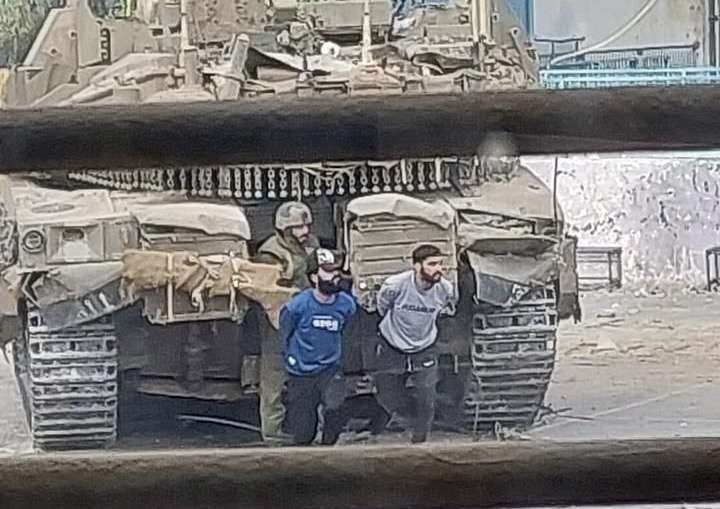
“When infantry units were ordered to clear an area, dogs were sent ahead to sniff out IEDs (improvised explosive devices). In the first weeks of the war, so many dogs were shot or blown up that commanders began using captured Palestinians, pushing them into buildings ahead of IDF soldiers to pre-empt an ambush or getting them to open cupboards or lift up mattresses to trigger booby traps.”
The phrasing here is important: so many dogs were being wounded or killed in the process of protecting invading Israeli soldiers from explosive devices, Palestinians were introduced as their replacement. Israeli forces could not spare any more dogs, so they replaced them with abducted Palestinians — perhaps because they are considered more replaceable than dogs, perhaps because their blood is cheaper, perhaps to inflict collective punishment on a captive population, or perhaps because they thought this policy would discourage the use of IEDs by Palestinian resistance forces. The reasoning does not matter because, despite Steavenson’s omission of this fact, the use of human shields is a war crime as established by international law. There is no explanation which would change this calculation, despite the author’s presentation. Steavenson’s omission might be read as a stylistic choice to get us into the mind of a genocidaire, but then one has to wonder: for what purpose is The Economist explaining to its audience how and why genocidaires rationalize their choices?
Steavenson’s explanation of the long history of this policy does not read as a condemnation, either. Rather, the author downplays what she has already explained is an Israeli policy which has been used “for decades”. Later, she adds: “The word ‘protocol’ belies the ad-hoc use of Palestinians as human shields. In practice, it was ‘messy and not organised’.” She immediately goes on to describe how the Palestinians who were used as human shields were treated in a variety of different ways once the soldiers were done with them. Steavenson says that most were not later arrested and imprisoned on the other side of the so-called “perimeter fence”, but released, shot and killed, or met another fate left to our imagination.
The lack of an explicit policy about what to do with the Palestinians who survived their forced tenure as human shields does not make the documented, explicitly ordered practice of using human shields “ad hoc”. Instead, it arguably raises even darker questions (which the author doesn’t mention) about what proportion of Palestinians survived being made into human shields long enough to require an explicit policy for the treatment of survivors. That Israel’s tactic of using human shields is a consistently-applied policy has already been thoroughly documented by Palestinian survivors and human rights organizations operating in Gaza. Framing this policy as “not organized” is a denial of the ubiquity of its use, which reflects consistent, routine, premeditated internal orders.
The denial of the very war crimes the author describes does not end there. Instead, it arguably reaches its peak when Steavenson applies the term Israeli forces use for the victims of their human shields policy: mosquitoes. Steavenson begins by introducing the term and its meaning, using quotation marks to indicate she is borrowing this term from Israeli forces. But after a couple of mentions, the author begins to use “mosquito” as a way of referring to these Palestinians herself, as a term she is applying and adopting as her own. The excerpt reads:
“The practice became so widespread that it had its own name: the mosquito protocol. Jonathan heard about other units using ‘mosquitoes’, and was not surprised when his own commander asked for one. Jonathan thinks their ‘mosquito’ had been handed over by another unit. He was a young man, who seemed rather simple. (The mosquito had been interrogated by Israeli intelligence units and deemed not to be a member of Hamas.)... When Jonathan’s unit was withdrawn from operations, they didn’t take their mosquito to prison in Israel or drop him on the humanitarian corridor: ‘We just told him to go.’ Some released mosquitoes, many of whom were men of military age, were later shot by soldiers.”
By the end of the interviewee’s recollection of his participation in the war crime of detaining a member of the local population to use as a human shield, the author has joined him in seeing these victims of a genocide, as mosquitoes. The dehumanization reaches its zenith in her own use of the term in describing the cold-blooded murder of a Palestinian, abducted, put through the horror of being a human shield for an unknowable period, surviving unthinkable conditions while captured among an invading colonial force, and finally having completed this experience. She says, “Some released mosquitoes… were later shot by soldiers.” The sentence includes a softening of and explanation for the murder she describes, not a condemnation: “many” of these Palestinian human shields “were men of military age”. Men of military age is a euphemism for “Hamas” or “members of a resistance group”. Steavenson is arguing that soldiers like Jonathan had a reason for killing the Palestinians they had tortured: after all, they could be Hamas.
By the time Steavenson is done describing what her interviewee did to these men, women, and children abducted and held as human shields, she has reduced them to insects herself. The section ends with the IDF spokesman’s paragraph-long statement that the use of human shields is strictly prohibited.
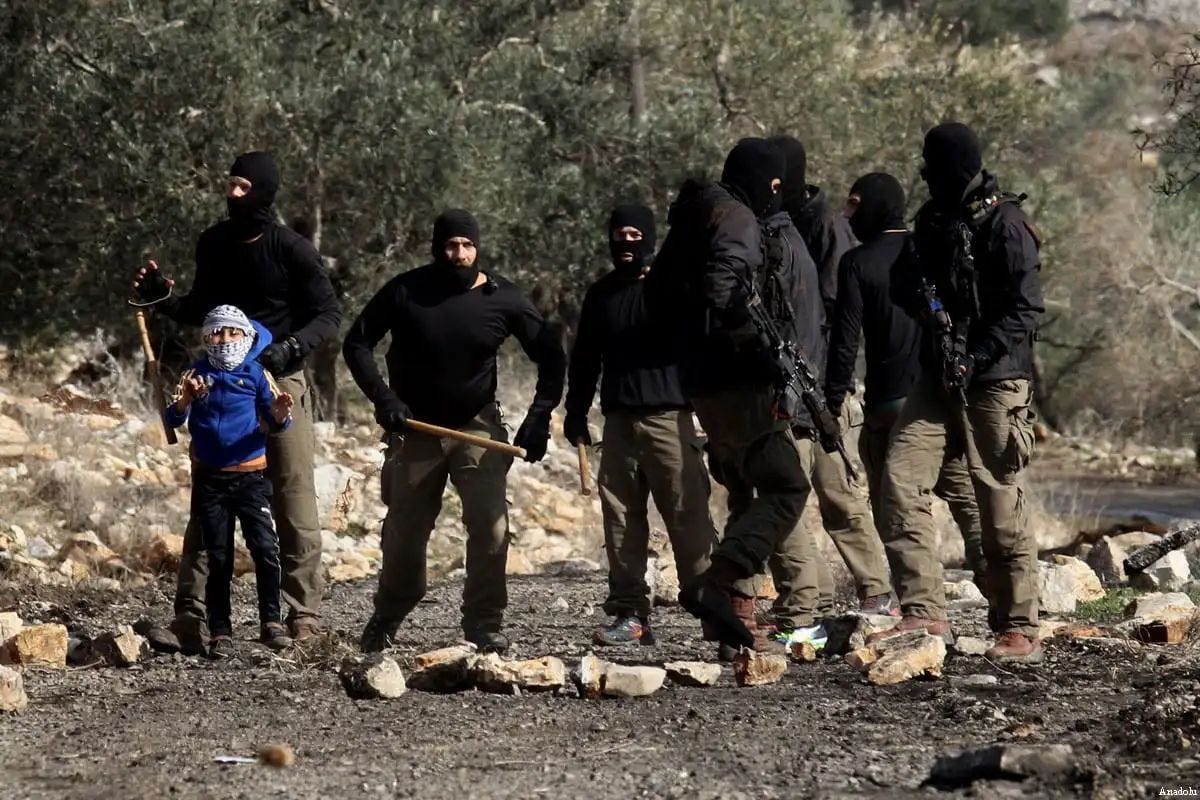
The author’s choice to describe these Palestinian human shields as mosquitoes could just be a flawed and ugly stylistic choice, if it were not for her inclusion of the unaltered IDF spokesman statement and the many other ways she asserts Israeli framing. The author does not identify any of the activities in which her interviewee took part — willful killing, the use of human shields, forced transfer, unlawful confinement, taking hostages, extensive destruction of property, and more — as war crimes, although all are war crimes. In fact, Steavenson never mentions the word “genocide”, instead solely referring to Israel’s assault on Gaza as a “war”. The prolonged forced displacement and destruction of entire neighborhoods and towns becomes the creation of “buffer zones” along the “perimeter fence”. Most importantly, there is no history to this “war”; Steavenson describes her interviewee leaving Gaza to go “home” as if home is a distinct geographical entity in Europe, and not simply another part of occupied Palestine, whose indigenous inhabitants have been largely displaced in an earlier genocidal attack. There is no acknowledgement that wherever the “home” is to which her interviewee is retreating, there are almost certainly Palestinians in Gaza who are refugees from this home. Steavenson completely erases the continuous, ongoing violence of colonialism, of which this latest genocidal aggression is only one part, and normalizes the existence of Israel outside of and away from Palestinians, on whose bones it has been built. In doing so, and in these extensive and consistent acts of omission, Steavenson reaffirms the hegemonic zionist position.
Erasing Palestinians
In omitting history, Steavenson erases Palestinians, Palestinians’ origins, Palestinian motivations for resistance and, likewise, zionist strategic goals for genocide against Palestinians. It is striking that in an article describing the crimes an Israeli soldier has carried out against Palestinians in Gaza, Palestinians are eerily absent. Steavenson does not cite a single Palestinian source, name or describe a victim, or even use a hard casualty count to determine the greater harm caused by Israeli forces against Palestinians in Gaza (the closest she comes is “tens of thousands” of Palestinian martyrs). Occasionally, Palestinians are described through the use of military expressions: “mosquitoes” or “wasps”, males of “military age”, human shields — even “dirties”, a euphemism which highlights the Israeli desire to avoid naming Palestinians. At one point, Steavenson sets the context for her interviewee’s engagement for looting, made possible by the forced disappearance of Palestinians, by writing that these are “houses and flats abandoned by displaced Palestinians”. Even in an article about the crimes carried out against them, Palestinians are made into ghosts. The story takes place after the “displaced” (displaced by whom, we can’t know) have “abandoned” their homes.
This is not an oversight. Steavenson knows this history because she has spent time reporting in occupied Palestine. The absence is deliberate, because the two stories cannot coexist: the moment Gaza and the Palestinians there are returned to their history, the genocide reveals itself as continuous and structural, and the anonymous soldier’s private reckoning shrinks to nothing beside it. To keep Jonathan at the center, the Palestinians must be cleared from the frame, just as they were cleared from the homes his unit looted. When Steavenson is confronted with a choice between Palestinian history and the zionist narrative, she chooses zionism, and the erasure is the essential form that choice takes.
Two instances stand out as both intriguing and harmful. The first is one in which the author describes the injuries to which her interviewee’s fellow soldiers are subjected during the first year of genocide. She writes:
“Most, he said, were not caused by the enemy. ‘We had a case of friendly fire,’ and other injuries were caused by mistakes, such as soldiers getting hit by shrapnel after throwing a grenade and ineffectively taking cover.”
In this brief excerpt, the author includes a comment which has no real relevance other than to deny the effectiveness of Palestinian militant resistance in Gaza: “Most [injuries] were not caused by the enemy.” There is no obvious reason to note this, except perhaps to emphasize the poor training of Israeli forces — a possibility, since much of this article works to explain and assuage the cruelty of zionist war crimes. The other reason may be to claim that, on top of being “terrorists”, as she calls them, resistance fighters in Gaza are ineffective. She does this again later in the article, after her interviewee returns to Gaza for another round of destruction: “Jonathan’s unit was sent back to areas it had already cleared. The soldiers encountered fewer Hamas fighters than they had before.” Steavenson is illustrating the tedium of prolonged invasion, allegedly undisturbed by many guerrilla attacks, but she is also signaling to the audience that Israeli forces encountered less Palestinian fighters because they were finding success in their “clearing” efforts.
The myths being propped up here are important to maintaining both Israel and broader Western mythology: colonial forces are stronger, more technologically advanced, and impervious to guerrilla warfare. Indigenous resistance is both terroristic and futile. If Israeli soldiers don’t believe this, they will not be so quick to invade Gaza or Jenin, and if other countries in the West see the shortcomings of Israeli colonial mechanisms of control, including technology, they will be less interested in purchasing that technology and expertise.
Much earlier in the article, the author makes another rhetorical move of erasure. Steavenson spends a lot of time throughout this piece setting the audience up to understand and sympathize with her soldier interviewee’s participation in a genocide and various war crimes. Early on, as he sets aside his distaste for “occupation” in the wake of October 7, Steavenson encourages us to believe that Israelis and Israeli soldiers know little of Gaza. She writes, “Members of his unit knew Gaza only through stories of tunnels and kidnappers, ambushes and snipers.”
There is some important historical background that must be uncovered to explain the depth of deception here. First, while Gaza is distinct in many ways from other parts of Palestine, it shares the same history. The Palestinians who live in Gaza are part of the same nation of Palestinians who reside in the West Bank, Jerusalem, the rest of occupied Palestine, and those in exile. To suggest that Israelis do not know Gaza except through simple images of violence is to deny the basic reality that Jewish Israelis know Palestinians in their daily lives, and that Palestinians in Gaza are a part of this whole. Palestinians are Jewish Israelis’ doctors and nurses, their janitors, those who build their homes and roads, their professors and students in university, and much more. Palestinians in Gaza cannot be separated from the larger whole of Palestinians, and there can be no denying that Israelis have regular interactions with Palestinians. In addition to the presence of Palestinian citizens of Israel, this knowledge of Palestinians was also facilitated by the reality that, before October 2023, more than 120,000 Palestinians from the West Bank held permits to travel across checkpoints regularly for work, healthcare needs, religious worship, and more, often interacting with Jewish Israelis in doing so. Palestinians from Gaza also traveled to Jerusalem through this permit system for healthcare, though at a much lower rate due to increased Israeli permit restrictions.
Furthermore, until 2005, Gaza was occupied by Israel in a wholly different way than it was before October 2023, with settlements and settlers taking up significant sections of the Gaza Strip, including those northwest of Beit Lahia, west of Rafah and Khan Younis on the coast, and in central Gaza at Netzarim, to bisect the Strip. Travel in and out of Gaza for Jewish Israelis was not the way that it is today — generally, impossible. It is only in recent memory that these settlements were destroyed and the settlers forced to leave, which was followed by tighter movement restrictions and the imposition of the wall and siege on Gaza.
The author needs the audience to see value in her interviewee’s moral discomfort, and in order to do so, we must see value in his character; Steavenson wants us to believe that her soldier was a part of genocide because he didn’t know the people of Gaza except through hostage-taking and tunnels. But this is not believable. While her interviewee may be too young to have seen the process of disengagement in 2005, he must know Palestinians in real life — at the very least, because she tells us he has already invested time in Israel’s colonial management of the West Bank (“Jonathan… had served in the West Bank, which had left him uneasy about the harshness of the occupation.”). And, even if he only knew Palestinians through the avenue of his military participation, Jonathan also came to know Gaza another way before his participation in invasion: through the intelligence his military collected by surveilling Palestinians for decades to inform their invasion strategy, through the six meter walls he could see as they prepared to invade, through the bombing he heard in the first weeks after October 7 (and, no doubt, had at least heard of before — Israel’s most recent attack on Gaza before October 7, 2023 was a three day bombing campaign in September 2023). Steavenson deceives her audience in order to encourage them to buy into the reasons a zionist soldier might carry out war crimes against a captive population and to make this a compelling story of moral struggle, but in order to do so she erases the captive population and its history, time and again. In doing so, she becomes part of the erasure of this genocide in service of rehabilitating its perpetrators.
Rehabilitation, Rehabilitation, Rehabilitation
Steavenson ends her article with a discussion of Israeli forces’ experiences of PTSD, guilt, and consequences. She provides statistics on the number of Israeli soldiers who have attempted suicide and describes the increased experience of “moral injury” after participating in this genocidal aggression on Gaza — Steavenson defines moral injury as “when shame and disgust at one’s actions cause depression and anxiety”. She notes, though, that “The concept of moral injury is controversial, since it casts perpetrators as victims.”
Moral injury does not make a perpetrator into a victim, but rather, it makes a perpetrator human. People who take part in atrocities should feel ashamed. People who engage in genocide deserve consequences, including internal ones. It is a human reaction to feel bad for carrying out war crimes. More interesting than the number of attempted suicides by Israeli soldiers is how small the number is compared to the total soldiers participating in genocide (also notable that Steavenson decides to give us this specific number but not the number of Palestinians killed in the “war”).
It is illuminating that Steavenson thinks moral injury casts perpetrators as victims — it is perhaps the most clarifying sentence in the article, which explains how she has repeatedly framed her interviewee and other Israeli soldiers as victims by couching descriptions of their actions (many of which constitute war crimes) with explanations for them. Some examples: Jonathan was put off by his experience of occupation in the West Bank and did not want to participate, “[b]ut the horror of the massacres on October 7th swept away his doubts”; Jonathan took part in the genocide against Palestinians in Gaza because he was very affected by October 7 — the author includes a photo with the caption “Debris and damaged belongings are scattered inside a house in Kibbutz Be’eri, after it was attacked by Hamas militants on October 7th… Soldiers tasked with clearing houses after the attacks break down crying at the sight of Challah bread abandoned on a dining-room table”; Jonathan took part in slaughtering any Palestinian man of military age he encountered in areas with forced displacement orders because “Jonathan’s commanders said that any Palestinian male could be a threat because Hamas fighters often moved around unarmed and their scouts wore civilian clothes”; Jonathan looted displaced Palestinians’ homes because he “became numb”, “‘You become numb to it,’ Jonathan told me. ‘Everything is destroyed… There is the noise of bombing, donkeys braying, but you get used to it.’”; Jonathan and his unit took part in mass demolition campaigns of civilian infrastructure, razing entire neighborhoods because “[t]hey were given operational justifications”; as the war continued, Jonathan became disillusioned, not by his own actions but because “[h]ostages remained in captivity and Hamas had still not been destroyed”.
Moreover, the introduction of this perpetrator-as-victim dynamic through the concept of moral injury explains much of the ethos behind both the interview and the organization that set it up for Steavenson — Breaking the Silence. The interviewee describes his actions and his feelings about them at the time of the interview strikingly:
“‘At the end of the day a soldier will do what he is told to do. The systematic destruction in Gaza is… not our decision, it’s a policy. Of course, I have criticism of myself, and I feel guilty and ashamed for some of the things I took part in. But I also understand that the problem is the system, is the government, not the soldiers on the ground.’”
Is it cliche to point out the historical reverberations embedded in this comment, reeking of a soldier’s claims of “just doing orders” only kilometers away from the site of Eichmann’s trial in Jerusalem? If it is, that is only because it is just as cliche to claim one can distance themselves from the orders they carried out by placing the responsibility solely on the authority doling these commands out.
Nonetheless, this aligns perfectly with the quote Steavenson places at the top of the article from BTS’s executive director: “It’s the entire system… It is systematic crimes that we are doing”. The underlying commentary is the same as Jonathan’s: is not us, it is the system that victimizes us all. And if the system is victimizing everyone, then responsibility for changing this system lies not just with the individual perpetrator but with everyone, including the victims, as all are victims of the system — the perpetrator only has to “break the silence” to let everyone else know what’s been going on under their noses. This is the extent of BTS’s advocacy work, and the implication of Steavenson’s article — that Israelis “back home” just have no idea what is being carried out against Palestinians in Gaza. Like Steavenson’s claim that Israelis preparing to invade Gaza knew nearly nothing about the place or its people, this is false.
Yes, of course, the larger issue in Palestine is the systems — zionist settler colonialism, capitalism, imperialism. But to suggest that those carrying out the functions of those systems on the most minute levels are not responsible for their actions — worse, that they are victims of their own actions — is beyond the pale. These are people who have carried out horrendous crimes for which they deserve to be prosecuted. Anonymous revelations are not a consequence.
Steavenson has actually done something far worse than try to rehabilitate the reputations of individual Israeli soldiers. Steavenson has written genocide propaganda. By repeating disinformation, using ahistorical hegemonic zionist framing, including the claims of zionist military spokesmen without commentary, erasing history and Palestinians entirely, and attempting to rehabilitate the reputations of soldiers animating a genocide, Steavenson has taken this genocide out of history entirely, and provided a softened, anonymized version of events that attempt to make logical the actions of mass murder and destruction, and allow the audience to all but forget about the actual victims of genocide. This is only possible because of the normalized dehumanization of Palestinians and the insider status of Jewish Israelis in the Western world, a dynamic which continues at Palestinians’ peril and that of all colonized and oppressed people everywhere.
In Palestine, when there is news to report about zionist crimes, it is the Palestinian victims and their advocates — lawyers, journalists, activists, human rights monitors, etc — who report them first and most accurately. It is Palestinians who build the files and collect the media, firsthand reports, and corroborating evidence. In the case of Israel’s genocidal aggression on Gaza over the last few years, this has been the case from the start — and those gathering and reporting the evidence have paid for their efforts with their lives as the very forces Steavenson interviewed murdered them in targeted, intentional strikes or months-long series of assassination attempts.
There is no context in which perpetrators, like those who have testified at BTS, are expected to report all of their crimes. In cases of genocide, war crimes, and atrocities, investigations are not situated around the confessions of perpetrators, but the reported experiences of survivors. Still, in this article, Steavenson claims that “the use of human shields was first reported, based on testimony gathered by Breaking the Silence”. It is not clear whether Steavenson is referring to the use of human shields in the genocidal aggression against Gaza, in previous Israeli aggressions in Gaza, or elsewhere, but regardless, it is a false assertion. The documentation of most crimes does not begin with a confession by the perpetrator, and this is especially true in Palestine. To suggest that the world rely on the confessions of perpetrators of violence to gauge the crimes of the state directing them is nothing short of an attempt to obscure genocide, not unlike the war crimes described but not identified in this article which do not even scratch the surface of the depravity we have all witnessed, live, for three years. Like other Western journalists flown in on their editors’ dime to pontificate about crimes committed against people they do not name or cite, but help to erase, Steavenson deserves nothing but our mockery.
Full piece available here.