

Demolitions Remain at Double the Historical Pace
West Bank and East Jerusalem demolitions, January 1 – August 19, 2026

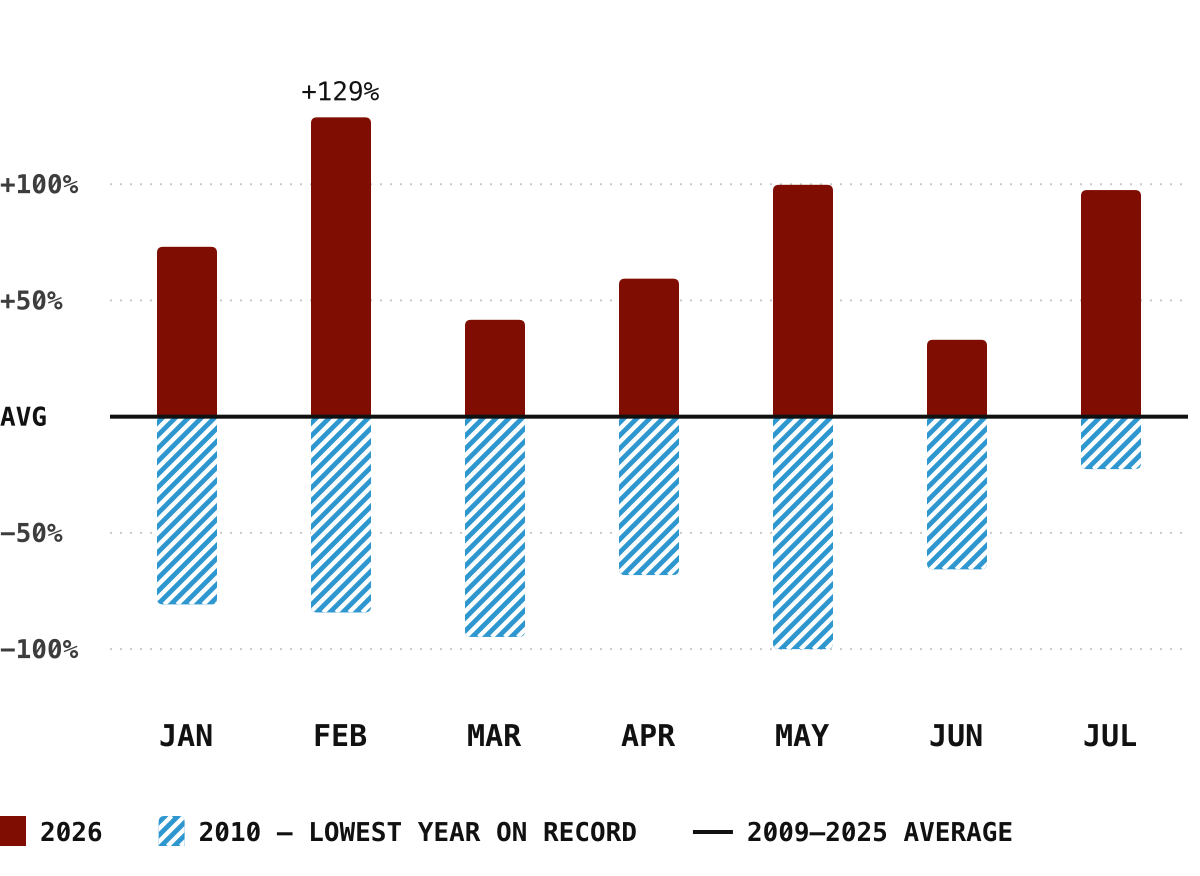
Home demolition incidents by month, measured against the 2009–2025 average for that month, represented by the middle line. Solid bars are 2026. Striped bars are 2010, the lowest year on record. August is excluded because it is incomplete. Source: UN OCHA
Between January 1 and August 19, the zionist movement carried out 315 demolition operations across the West Bank and East Jerusalem, destroying 1,004 structures and displacing 1,450 Palestinians, 658 of them children. Over the same calendar window each year since 2009, the averages are 181 operations, 518 structures, and 809 people displaced. 2026 is running 74 percent above the historical pace on demolition operations, 94 percent above on structures destroyed, and 79 percent higher on the displacement of Palestinians. As a reminder, these figures exclude the near-total destruction of Gaza and the methodical demolition of Palestinian life in 1948 Palestine, including homes and structures in the Naqab.
People are starting to realize this is not a spike or an anomaly. After several years at this sustained rate, this appears to be the Israeli state’s normalized operational pace of ethnic cleansing across the West Bank and East Jerusalem. Demolitions this year sit just below 2025 (370 operations) and 2024 (342), the two worst years on record. Three consecutive years now cluster at double the seventeen-year average.
Three incidents from the past eight weeks show how that rate is produced.
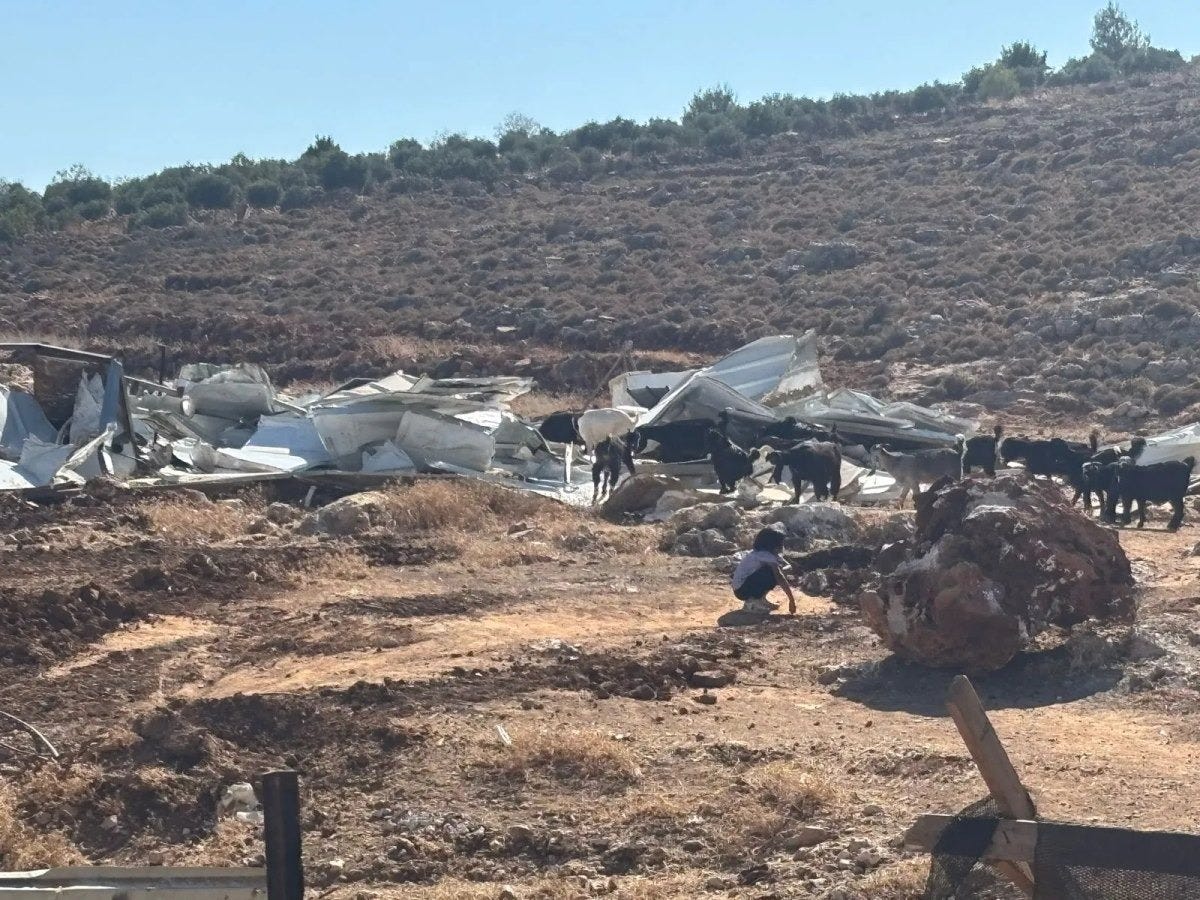
Wadi Mu’nes, near Immatin, Qalqiliya, July 14, 2026. Thirty-one structures destroyed, 64 people displaced, 34 of them children.
On July 14, the Civil Administration arrived at the Arab al Jahalin encampment in Wadi Mu’nes, near Immatin in Qalqiliya, with three bulldozers and leveled 31 structures. Nineteen of those structures had been donated as humanitarian aid in 2021 and 2022; aid agencies returned with tents, bedding and cash to replace what had just been destroyed. Local reporting also counted twenty dunams of sheep pens, fodder stores and shelters gone in a morning, leaving families who had herded there for a generation with essentially nothing — which, of course, is the point from the Israeli perspective.
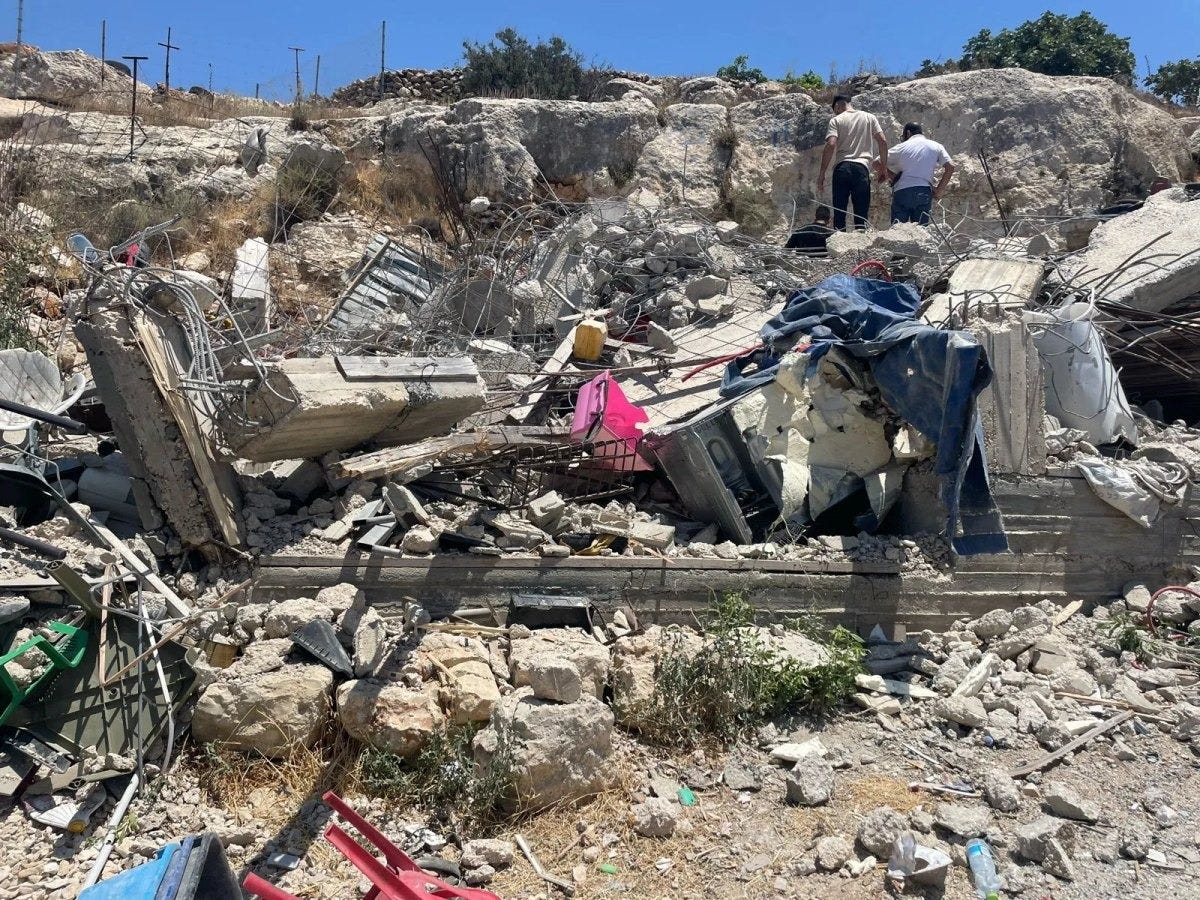
Nahalin, west of Bethlehem, July 22, 2026. Three inhabited homes destroyed, 24 people displaced, 17 of them children.
Nahalin, a small community west of Bethlehem city, has had several demolitions this year: two homes on May 25, five structures on July 22, seven more on August 5. The July operation displaced 24 people, seventeen of them children, who were not permitted to clear their belongings first. Fourteen more homes in the village await the execution of existing demolition orders against them in a town 91 percent of which lies in Area C.
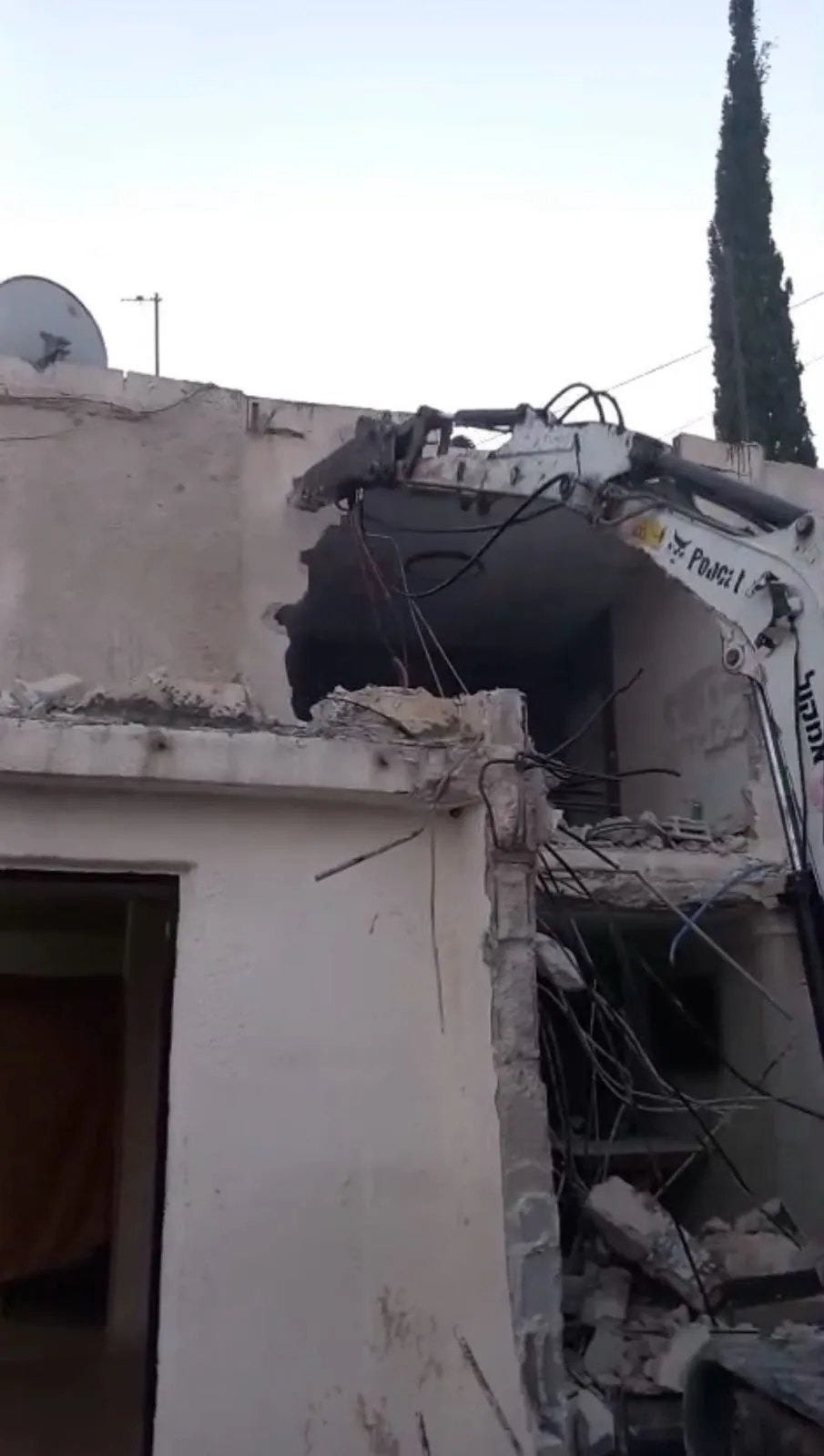
Jabal al Mukabbir, East Jerusalem, August 14, 2026. Sixteen people were displaced, nine of them children.
On August 14, the Abu Zaiter family demolished its own home. They had applied for a permit, and the courts refused them. They had paid over 50,000 shekels in fines for building without one, in installments they are still making. The July notice gave them twenty-one days to destroy the extension themselves or be billed for the state’s bulldozers, a choice thousands of Jerusalem families now face, with municipal demolition fees running above 100,000 shekels. Sixty-four of this year’s 315 operations, one in five, ended with a family demolishing its own home. Can you imagine being a father and having to destroy the bedrooms of your children? Most of the trauma imposed on Palestinians is beyond the scope of what outsiders can comprehend.
Palestinians are really stuck in an impossible decision, because ninety percent of this year’s operations cite a lack of permit inside a system in which almost no Palestinian building plan in Area C is ever approved. The Civil Administration has conceded the discrimination in its own figures. The planning regime was built to produce this result. The permit is not a document Palestinians can obtain, and they simply fail to do so; in reality, it is the legal form the zionist movement deploys to keep Palestinians in a state of flux. The state writes a rule that cannot be complied with, prosecutes the non-compliance, charges the family for the demolition, and fines them for the rubble.
Contrary to liberal zionist talking points, this is not an “occupation” gone wrong at the edges. It is a settler colonial project doing what such projects do: replace one people on the land with another, and build the administrative machinery that makes the replacement read as zoning and the indigenous population unable to live within the confines of “Western norms”. Nearly half of this year’s displacement, 665 people, fell on Jerusalem, where the demographic arithmetic has never been hidden.