

Life, Death, and zionist Bureaucracy in The Voice of Hind Rajab
Reflections on the film and the many questions it raises about our strategies for protecting and caring for one another in a the face of bureaucracies governed by genc logics.

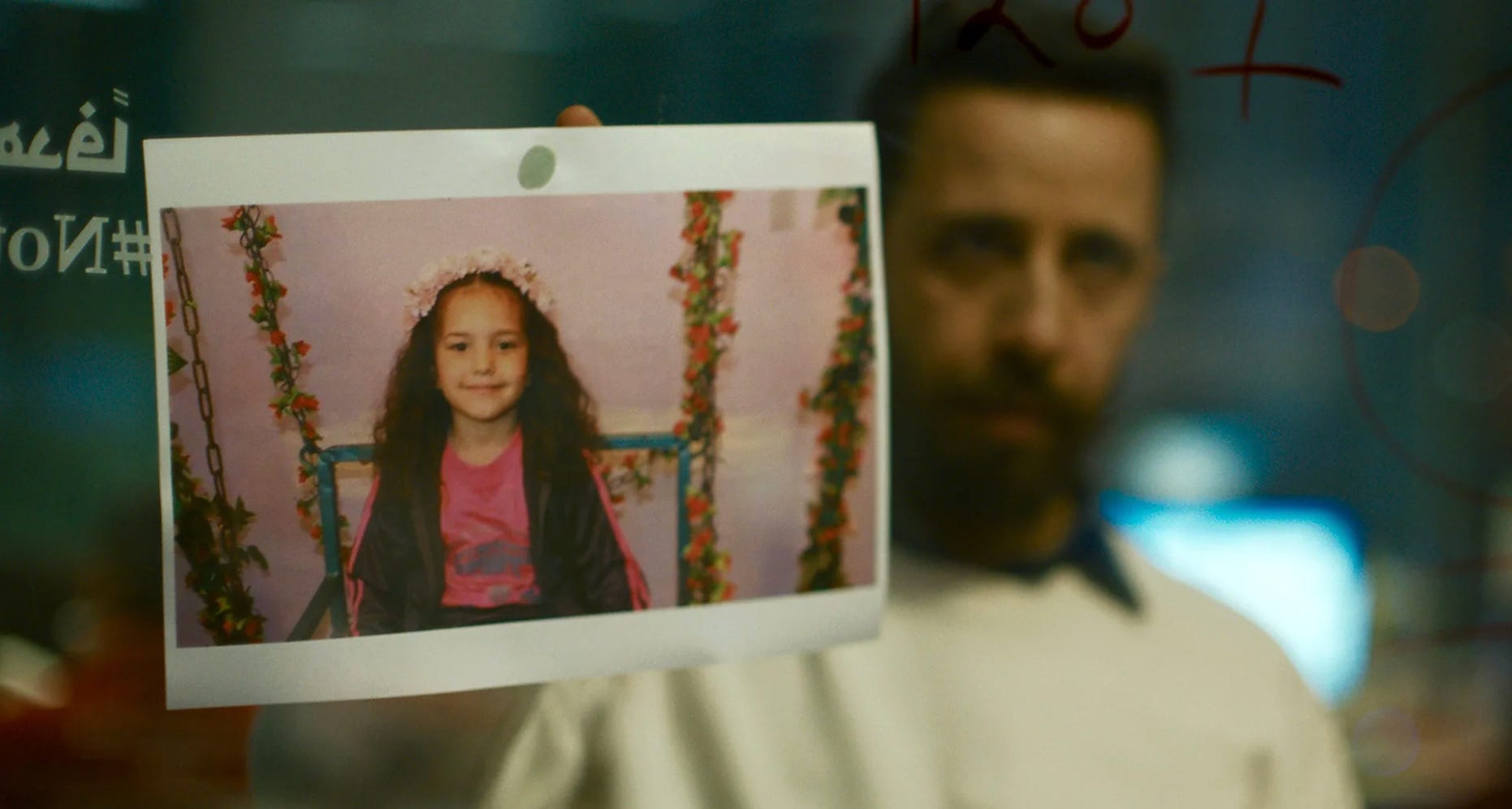
About a month ago, I went to Dar Al-Kalima, a university in Bethlehem, to watch The Voice of Hind Rajab (2025) with a good friend of mine.
Dar Al-Kalima showed the film as part of a larger series, one of many film screenings taking place in the city of Bethlehem itself and across Palestine. In the last year alone, several prominent films about Palestine have been released with the backing of internationally-recognized actors and producers, including Hind Rajab, Palestine 36, and a third film, All That’s Left of You. While I haven’t yet seen the other two, unlike many other films about Palestine that have enjoyed relative prominence, these films have not been produced with the same burden as some others whose stories are mediated by the colonizer’s gaze (Five Broken Cameras, No Other Land). This makes a difference: Palestinians are not shown as primarily victims, and their colonizers do not need to be portrayed as redeemable. In fact, they do not need to be portrayed at all, and in Hind Rajab, uniquely, they are not. Palestinians themselves — with a Tunisian director, in the case of Hind Rajab — are able to represent themselves, their lives, culture, and reality according to their own experiences and perspectives.
We streamed into the university’s movie theater, greeting friends as we settled in, tissues at the ready (literally). Certainly everyone in the audience already knew the story of Hind Rajab, a five year old Palestinian child, fleeing Tel al-Hawa in Gaza City with family members according to the orders of invading Israeli forces. She was left trapped in a car after these same forces killed the family members in the vehicle with her, and eventually was murdered by them herself alongside the emergency responders who came to rescue her. Anyone who was following the news at the time — late January 2024 — will remember seeing the Palestinian Red Crescent Society’s appeals online for international support and intervention, the subsequent release of some of the gut wrenching audio between Hind and the PCRS, and the news, twelve days later, that both Hind and her rescuers had been found dead, having been knowingly targeted and murdered.
After I saw this movie, I felt the need to say something about it. I’m not a stranger to watching films or docudramas about devastating things that have already happened, but for me this film evoked an answer to a question I have wondered about with regard to these types of films: who writes a movie about an event so many people already know of? Maybe it’s obvious, but: someone who is invested in how the story will be told. Whereas in many cases this investment may feel cynical, Hind Rajab unfolds with a deep sense of truth, revealed in greater profundity as the story develops. This deep investment in how the story is told — not just in the story of Hind’s murder and the efforts to prevent it, but the enactment of Israel’s genocide in Gaza — is reflected in so many aspects of this film, not least among them the use of Hind’s actual voice, the procurement of her mother’s support for the film, the writing, and of course the acting by an all-Palestinian cast.
Set in the interior of the PCRS’ Ramallah offices, from the outset the film introduces the interconnectedness of Palestinians, despite geographical fragmentation by zionist colonization. Calls have been transferred here as they could no longer be handled by the Gaza branch; now, Palestinians in Ramallah — what feels like a world away from Gaza though it is less than 100 kilometers — are responsible for coordinating emergency responses and facilitating rescues in the midst of a genocide.
This is no small responsibility, and the tension which it produces begins to percolate almost immediately between two of the central characters, based on real people. Omar Alqam (played by Moataz Malhees) is a dispatcher who receives a call from Hind’s cousin, Hamadeh, before she is killed, and Mahdi Aljamal (Amer Hlehel) is the office’s operations manager. Alqam is portrayed as reacting as many of us might do, desperately (and sometimes violently) seeking intervention to facilitate the rescue of this small child after having personally borne witness to her cousin’s murder over the phone. Aljamal, the manager, insists on doing things according to procedure, drawing both Alqam’s and the audience’s attention to the memorial on his office wall for the many Palestinian emergency responders murdered in the four months of the genocide alone. This procedure requires coordination, through the International Committee of the Red Cross, with Israel’s military apparatus — a long and painful process with an unknown outcome, but bolstered by the intervention of an international body and the promise of protection it is meant to provide emergency responders.
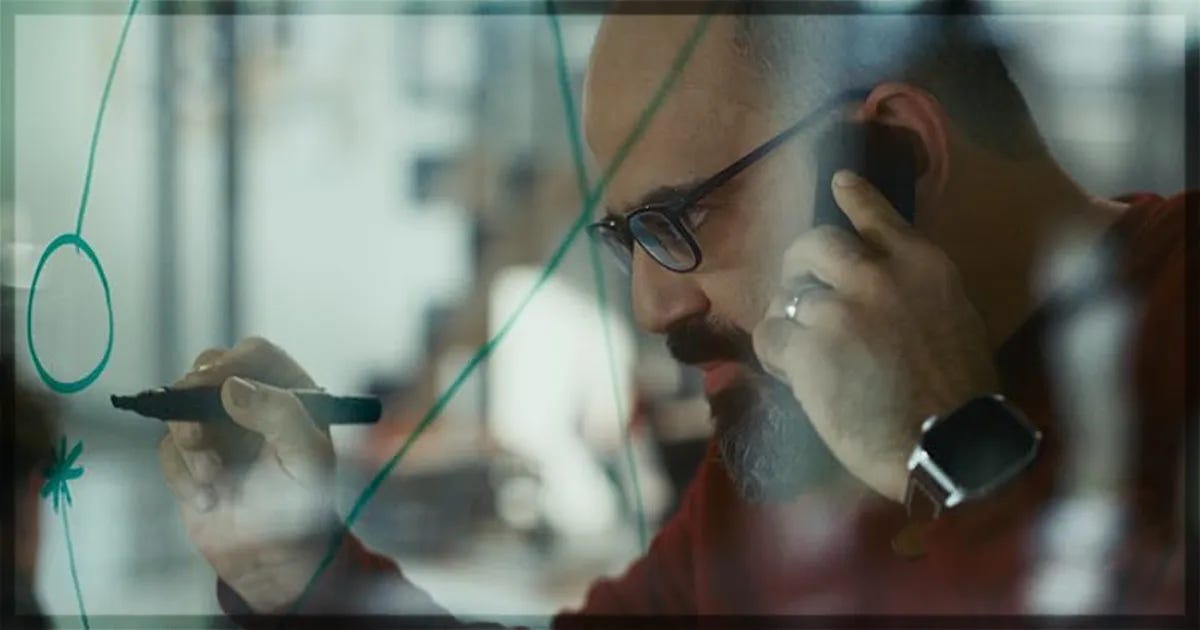
It is this procedure that frames the trajectory of much of the movie, alongside excerpts from Hind’s phone calls with the PCRS staff over several hours. As the two men argue over the correct course of action and the long process of coordination begins, they are joined by two co-workers, dispatcher Rana Hassan Faqih (Saja Kilani) and mental health and psychosocial support worker Nisreen Jeries Qawas (Clara Khouri), who take up the task of maintaining contact with Hind and supporting her emotionally. This emotional support is not fictitious — the film cuts in audio from Faqih’s prayer recitation with Hind in an attempt to keep her calm as she is surrounded by the bodies of her murdered family, as well as invading soldiers, tanks, and guns outside the car. At some point, as a desperately frustrated Alqam suggests that Aljamal can pass a message to the Israeli military to rescue Hind themselves and use this as an opportunity to further their propaganda campaign, the film reveals a simple truth about the depth of zionist cruelty: between their close physical presence, heat sensors, audio capturing capabilities, and surveillance technology, there is no way the Israeli soldiers do not already know that Hind is there, hiding in the car, and has been there for hours.
With no exaggeration, this film reveals an important truth of Palestinian existence in Palestine (whether in Gaza, the West Bank, Jerusalem, or lands captured in 1948): life and death are shaped by the violence of zionist bureaucracy and its absurdity. Clinging to the logic of procedure for the sake of northern Gaza’s rescue team and Hind Rajab, the operations manager insists on doing things by the book — and the audience can see that he is not necessarily wrong. In a genocide, there will be more people to rescue, even more little children like Hind; a failure to coordinate may result in no future coordination at all as punishment; perhaps most palpably, he does not want to see another rescue team (the last team in northern Gaza) murdered. Aljamal stoically sticks to this decision, though he uses his own tactics to try to speed the process along — among them, the social media posts about Hind’s emergency, and calls to influential contacts.
The procedure eventually comes to an end, and the approval for the emergency responders to travel to Hind is received. Despite this, emergency responders Yousef Zeino and Ahmed Al-Madhoun are killed by Israeli forces only a few feet away from the car in which Hind is waiting, and their ambulance destroyed. Following the procedures did not save anyone.
As anyone who has studied or experienced Israeli colonial bureaucracy will know, the procedures are not constructed to save Palestinian lives. Rather, Israeli military bureaucracy is created to make things as difficult as possible for Palestinians to continue to live on their lands, and the policies constructed to administer (read: strangle) Gaza are no exception. One only needs to remember the list of “dual use” items effectively banned by Israel from entering Gaza long before October 2023, a collection that included incubators, ventilators, defibrillators, and thermometers. Likewise, Israel’s siege on Gaza and its procedures for the acquisition of medical exit permits has caused the death of children and adults who were denied the permits outright or still in the process of awaiting them, also before 2023.
Following the procedures also fails because the logic of zionism and its state forces is genocidal; there will be no consequences for the soldiers murdering healthcare workers from their superiors. There is something in this level of cruelty that Hind Rajab captures so eloquently, without heavy handedness: Israel is killing Palestinians for the sake of it, from little girls waiting to be rescued from among corpses to their rescuers who received approval from inside the very regime animating the actions of the soldiers who kill them. No amount of procedure, of appeals to international law or even self-interest, can wrest these genocidaires into a sense of humanity with regard to Palestinians.
When the film ended at the Dar Al-Kalima screening, there was not a dry eye in the house. Everyone who came, already knowing the story, was left with a new question: how do we actually care for one another in the midst of such violence and inhumanity — such an upheaval of such basic values and morals? This is not hypothetical for any of us alive in the world today. Facing incredible depths of genocidal depravity, we are all faced with a choice: will we turn toward our community and offer generosity, love, commitment, and compassion at the cost of personal sacrifice, or give in to the heavy pressure by colonial and imperial forces to be dismembered, internally divided and further fragmented in a desperate bid for false guarantees of individual security? As is often the case, people in very desperate situations can have the most wisdom to offer — Palestinians in the midst of famine in Gaza found ways to share meager resources from the earliest days of the genocide, from coffee to food to knowledge and moments of joy through music. These are not small things; giving under conditions of insecurity, when you have little and don’t know when more might come, is both an act of personal sacrifice and investment in the collective.
During the post-film reflection, everyone expressed the importance of the film, but one woman noted the urgency with which it spoke: how many Palestinian children have been murdered with impunity since the start of the genocide, since the start of zionist colonization? How many more murders, like that of Hind Rajab, will we allow there to be? And what are we willing to do to prevent this from happening again?
The answers to these questions cannot be made abstract. Palestinian ambulance crews and healthcare workers are still putting their lives in danger to rescue others. Like the mental health and psychosocial support worker in the film, Qawas, caretakers are still doing what they can to protect their loved ones and communities from facing the depth of manufactured trauma without protection as they themselves face the same traumas; they, too, need support to be able to continue with this effort. What are the rest of us willing to sacrifice to see the end of zionist colonization and the global scourge of imperialism which entrenches it? With the urgency for real action only escalating, and encouragement from the success of organizations like Palestine Action (both in beating their designation and their resonance among regular people in their juries), this is a time to come up with our answers and act on them.
Like many of the conversations around resistance and Palestine today, the film raises more questions than it answers. Whether we’ve found ourselves most sympathetic to the position of Alqam or Aljamal, we have seen the outcome of following procedures. We’re left to wonder whether Alqam’s early insistence on setting procedure aside and letting the ambulances travel to Hind from the beginning, without coordination, could have led to a different ending; at the same time, the shortcomings of this approach as a long term strategy are apparent. If we consider the coordination procedures as symbolic of the violent systems shaping our lives in Palestine and internationally, what is the logical approach to dealing with a system whose function is not to save lives but to facilitate slaughter (despite bureaucratic trappings of order, legitimacy, and international complicity)? Is it actually practical to continue to operate within that system’s procedures? And if not, what are the feasible alternatives? How can we operate outside of it without falling into another trap? Knowing that these questions are all connected to choices about how we care for ourselves and each other, it is not just that we must find new ways forward — essentially, they must be strategies with a chance of success.
The Voice of Hind Rajab renewed some of my faith in the ways in which we can collectively tell our own stories, our own histories, in our own voices, for the sake of preserving important histories. But it is not just about archiving stories from a genocide; agency lives in the current moment, and we shape history and the way it will be told with the actions we take today. Hind Rajab reminds us of the urgency of this action and beyond, as we confront unimaginable cruelty and depravity.