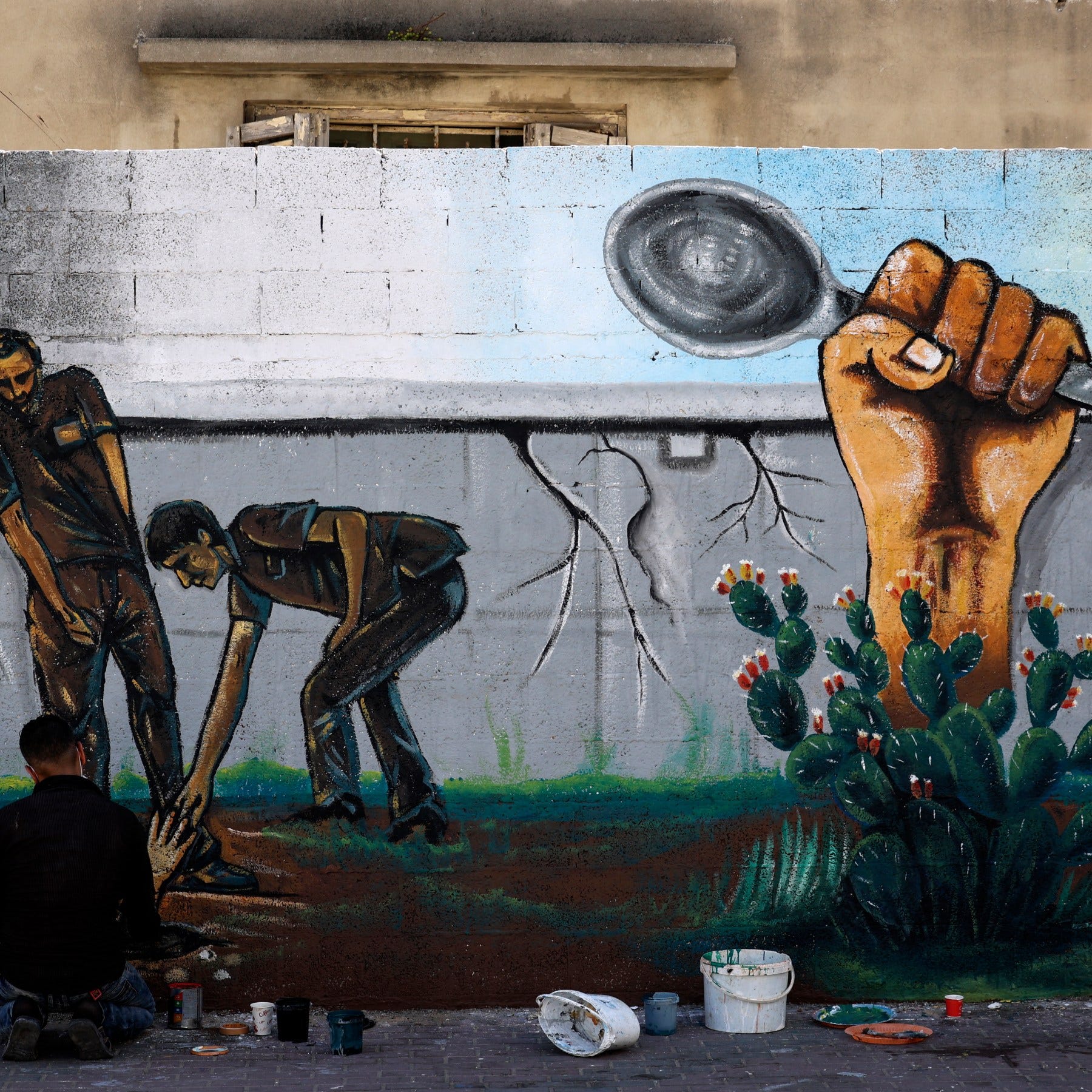
Reflections on Palestinian Prisoners' Day
Not one Palestinian should be imprisoned by foreign occupiers. As we survey the reality of zionist prisons in 2026, this simple fact must guide our action.

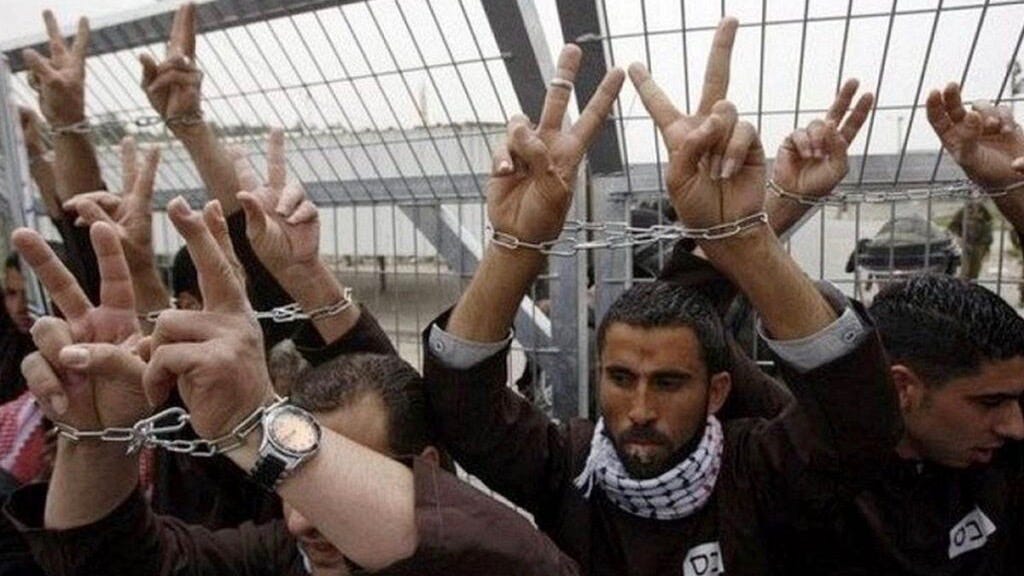
Today, April 17, is Palestinian Prisoners’ Day. The date was chosen to commemorate the release of Mahmoud Bakr Hejazi on April 17, 1971, during the first prisoner exchange between Israel and Palestinians — in this case, the Fatah movement. The day itself is about remembering our prisoners and aligning our actions and visions of justice with their interests.
This year, as we commemorate Palestinian Prisoners’ Day, there are more than 9,600 Palestinians currently held captive in occupation prisons. Among these are 3,532 administrative detainees, all held without charge or trial under military order for renewable six-month periods. This is about 36.7% of all known Palestinian prisoners. Another 1,251 prisoners are Palestinians from the Gaza Strip are held without charge or trial according to the “Unlawful Combatants Law”, which allows for the indefinite detention of someone “who is a member of a force perpetrating hostile acts against the State of Israel or who has participated in hostile acts of such a force, either directly or indirectly”. These prisoners make up 13% of the known Palestinian prison population. This means that, among the Palestinians we know are imprisoned, about 49.7% of them have not been charged with a crime or tried, and can be held indefinitely.
These numbers do not include Palestinians disappeared from the Gaza Strip by the zionist entity or held in military camps. Those figures are unknown.
Since the start of Israel’s occupation of the West Bank, East Jerusalem, and the Gaza Strip in 1967, 326 Palestinian prisoners have been martyred inside these prisons. Of these martyrs, at least 89 have been murdered since the period between October 2023 and today.
Israeli authorities are also withholding the bodies of 97 martyred Palestinian prisoners. Prior to October 2023, only 11 martyred Palestinian prisoners’ bodies were being withheld.
Perhaps the most telling figure from the post-October 2023 period is the total number of people arrested from the West Bank and Gaza during this period: 23,000. This includes both those who are still detained and those who were subsequently released; it includes those abducted during military invasions and home raids, those kidnapped from military checkpoints, and those detained in order to pressure a family member into surrendering themselves to Israeli prisons. Among those arrested in this category are at least 1,800 children. 342 remain imprisoned. Journalists account for 240 of these arrests, 43 are still detained. One of these journalists, Marwan Harzallah, was martyred in prison. He was being held in administrative detention. His body remains held by occupation prison authorities.
This day of remembrance is marked this year by the recent closure of Defense for Children International - Palestine (DCI-P), which finally shut its doors in April 2026 after 35 years of work defending the rights of Palestinian children. This could not have come at a worse time. The closure will end the DCI-P’s many important services, including legal aid to Palestinian children, the documentation of systematic violations against their most basic rights and protections, and the organization of children’s legal representation. This forced closure was instigated by a years-long campaign against DCI-P by the Israeli government and civil society organizations, including the decision by the Israeli Defense Ministry to designate DCI-P a terror organization alongside several other Palestinian organizations in October 2021. Among the other groups designated at that time were Addameer: Prisoner Support and Human Rights Association, al-Haq, the Union of Agricultural Work Committees, Bisan Center for Research and Development, and the Union of Palestinian Women Committees. Samidoun: Palestinian Prisoner Solidarity Network was given the same designation in February 2021. It is noteworthy that three of the seven groups targeted by these terror designations work to support Palestinian prisoners.
As has been well-documented, Palestinian prisoners are currently facing escalated, horrific conditions of neglect, abuse, and systematic violence at the hands of occupation prison authorities. Those who have been released describe the standardization of withholding of adequate food and water including water access for bathing, medical and sanitary neglect, abuse by medical professionals, physical abuse and torture, psychological violence and torture, and rampant sexual abuse. You can read Addameer’s recent January report on the conditions in occupation prisons here, and Euro-Mediterranean Human Rights Monitor’s April 12 report documenting testimonies of rape and sexual violence as “de facto state policy”. This claim is not at all an exaggeration, as Ben Gvir (current zionist Minister of National Security) recently disguised himself in order to inspect occupation prisons and to monitor their “operational compliance” with his orders to escalate systemic violence against Palestinian prisoners. This comes shortly after another visit to Ofer Prison in which Ben Gvir reportedly assaulted prisoners himself, stepping on their heads.
Introduced by Ben Gvir himself, the zionist government recently passed a bill mandating the death penalty for Palestinians found guilty of “terrorism related” offenses which result in the death of an Israeli. This law applies exclusively to Palestinians and is set to take effect starting at the end of April. Many human rights organizations have rejected this bill on the basis that Israeli military courts almost never acquit Palestinian prisoners of a crime when they are actually charged and tried — conviction rates hover around 99%.
But the issue is not whether or not Israeli military courts will be able to justly convict Palestinians and apply a death sentence for Palestinians accused of carrying out acts hostile to the zionist state. By design, they have never and will not. Citing the rate of conviction of zionist military courts suggests that there is a chance of reformation, or — more grotesquely — that if zionist military courts had more moderate rates of conviction, they could be trusted to apply laws such as this.
The reality is that not one single Palestinian should be imprisoned by foreign occupiers, let alone tortured and brutalized by them. There is nothing zionist courts can do to make the application of their colonial laws just, because they should not be legislating anything about Palestinian existence, life, land, or access to any of these things at all. Foreign settlers have no right to impose their laws on an indigenous population whom they would like to see forcibly disappeared — a goal to which they have exercised every possible effort. These laws are fundamentally unjust because they should not exist. Not one occupation prison should exist, just as the occupation itself should not exist. The primary issue is not just that the zionist entity has no right to murder Palestinians for resisting its existence and carrying out acts that serve this effort; the most heinous crime is that the zionist entity continues at our privation, our imprisonment, our death and dispossession directly. This is the reality we must address in order to do any justice to Palestinian prisoners and act in the interest of their freedom.