


Dear friends,
We’ve just launched our Substack, The Call, after serious consideration of how to best move forward with sharing our regular newsletters, forthcoming analytical pieces, and personal communiques like this one. We have much more planned for the coming months and year, so I thought I would share my thoughts about this space in the context of our collective’s history and some of our goals moving forward.
For more than two years we have watched as the US-Israeli death machine dramatically escalated the long process of Palestinian genocide, targeting those Palestinians trapped in the tiny enclave of the Gaza Strip. The horrors, filtered through screens and only illustrating an iota of the true experience in Gaza, are earth-shattering, even for those of us who study the horrors of colonialism in Palestine and around the world. Speaking for myself, it is the thoughtful interventions of knowledgeable people around the world that have helped to provide direction across the long chain of moments since October 7th — externally, as words and action, as well as internally, in the form of psychological support to continue believing in the possibility of another, better world that is achievable.
There are pieces I return to from the early days after October 7th, which still shed light on the condition of resistance in Palestine and help to recenter my analysis and even priorities. The authors of these pieces can feel like everything from therapists to interpreters, presenting thoughts that resonate in ways that make me feel that there are things I may have understood but certainly could not have articulated. These years, more than any others in my life so far, have illuminated the importance of explaining things to each other even when we think we might already understand.
The Good Shepherd Collective has long embraced its role as a translator of sorts, starting with our formation in 2017. We’ve done this most consistently by representing the reality on the ground in Palestine through both a description of daily events and our own analysis, grounded in Palestinian history and expertise, of how these daily events fit into the processes of zionist settler-colonial domination and resistance. This also occurs through confrontations with the knowledge gaps we discover within ourselves and during exchanges with others, both online and in person, which enable us to identify new avenues of exploration that warrant time and attention to inform organizing in support of Palestinian liberation. When we understand better, we can more effectively organize.
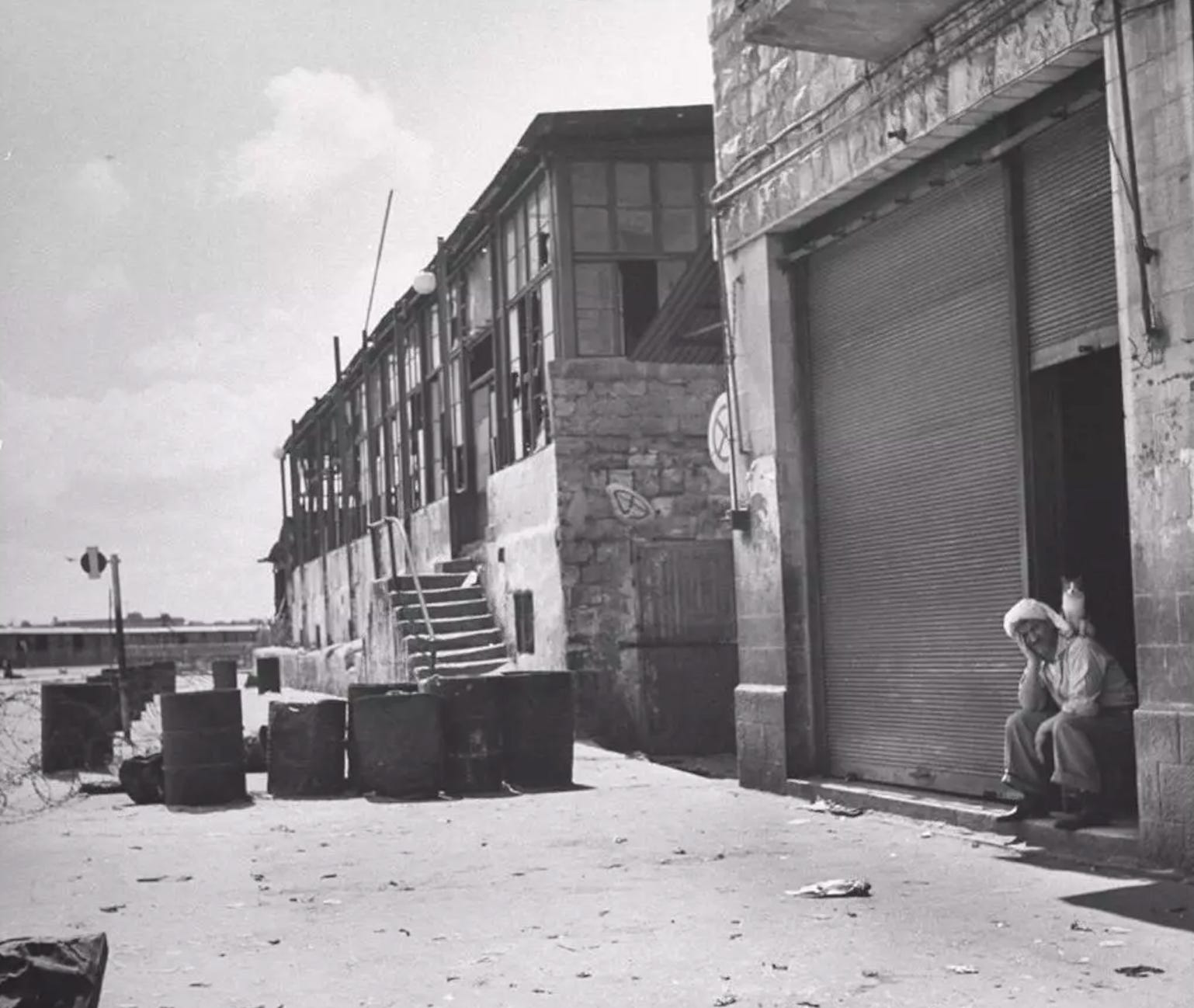
One of the anecdotes I return to repeatedly when explaining the need for “translation” in discussing Palestine revolves around the word “occupation.” Raised in the Palestinian diaspora, my family referred to our native Haifa as an occupied city; my grandparents had fled as young people under the threat of zionist militias’ barrel bombs and much more, expecting to return shortly. Instead, Haifa became occupied as it fell under the control of zionist forces, its Palestinian inhabitants confined to certain neighborhoods in the city and placed under zionist military rule. While touted today as one of the zionist entity’s “mixed cities,” a term which obscures the reality that imposed such a “mix,” Haifa’s landscape tells the story of a population forcibly displaced and barred from returning.
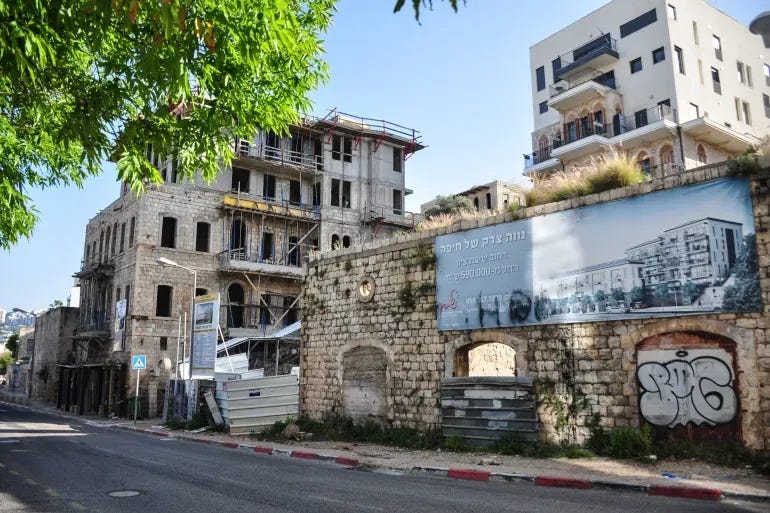
Despite having devoted considerable time to organizing around Palestine while I grew up in the United States, it wasn’t until I traveled to Palestine on a political tour in 2017 that I learned my understanding of the term occupation and that of my US American, German, and British counterparts was seriously different. Traveling throughout the West Bank and across the lands occupied in 1948, we met with Palestinians everywhere who described the situation as one of occupation. But while I understood them as identifying the long process of zionist colonization beginning decades before 1948, many others seemed to perceive this term as only applying to the occupation beginning after the 1967 war and Israel’s military administration of the West Bank, Gaza, and East Jerusalem, and the joint processes of colonization that followed.
While one might only count 19 years between 1948 and 1967, understanding the problem of Israeli or zionist colonization as one that began in 1967 marks a serious departure from popular Palestinian understandings of history. It also erases the reality and structures underlying the issues we discussed during the tour: home demolitions, the destruction of resources, forced displacement, land theft, and much more. Some of those in our group were Palestinians who were subjected to these colonial processes after being forcibly displaced into the West Bank following 1948. Zionist colonization is a long process in which expanding control over land and resources by force is achieved through the elimination and erasure of Palestinians, as well as their replacement by foreign settler populations. Long before October 7, 2023, Palestinian communities experienced repeated displacement at the hands of zionist forces and the state bureaucracy.
I tell this story often for a few reasons: most importantly, it illustrates what happens when our terms are not clear and mutually understood. We cannot envision a just future together if we cannot establish a starting point for addressing injustice; in fact, we cannot adequately address the harm we see unfolding on a daily basis. That reality became clear after October 7th, during which so-called political analysts subjected us to their worst, most racist readings of organized Palestinian resistance.
This story highlights the limits of international law and its terms, a valuable conversation to which we will certainly return elsewhere, but I also share it because in today’s climate of organizing, the obfuscation of popular phrases is an ongoing threat many have capitalized on to boost their engagement while offering very little in terms of substance. Many others have commented on the devaluation of the term “decolonization” or “decolonial” without a commitment to material changes; we have written about claims to terms like “anti-zionism” without any explanation of what this actually means for the organizations claiming to lead it from the imperial core (especially those investing in the Democratic Party). The Call is, in part, an attempt to more consistently put our thoughts to words in ways that can help inform others based on our experiences, and illuminate a way forward together.
One of the things I have always been proud to share about the Good Shepherd Collective (even before I learned the hard way about NGOs’ various limitations) is that we are funded by regular people and their consistent contributions. Over the years, funding has waxed and waned, and much of the work has been a volunteer effort. Making sure that our work is untethered to the political maneuvers and expectations of big donors has always meant that we are free to say what we think, and advocate for what we believe in. It has meant that the GSC can be a space for incubating thoughts that would not be accepted elsewhere — for example, the suggestion that we can talk about the zionist entity truthfully to anyone just as we do amongst one another: something that must be undone. It has meant that Palestinians and other people visiting and volunteering from all over the world can learn and write and speak about their experiences knowing that they will be supported rather than censored. The Call is an effort to garner financial support to sustain and expand these efforts.
Thank you for your support.
Until liberation and return,
Lara Kilani