

Settler Colonialism and Capital in Jerusalem

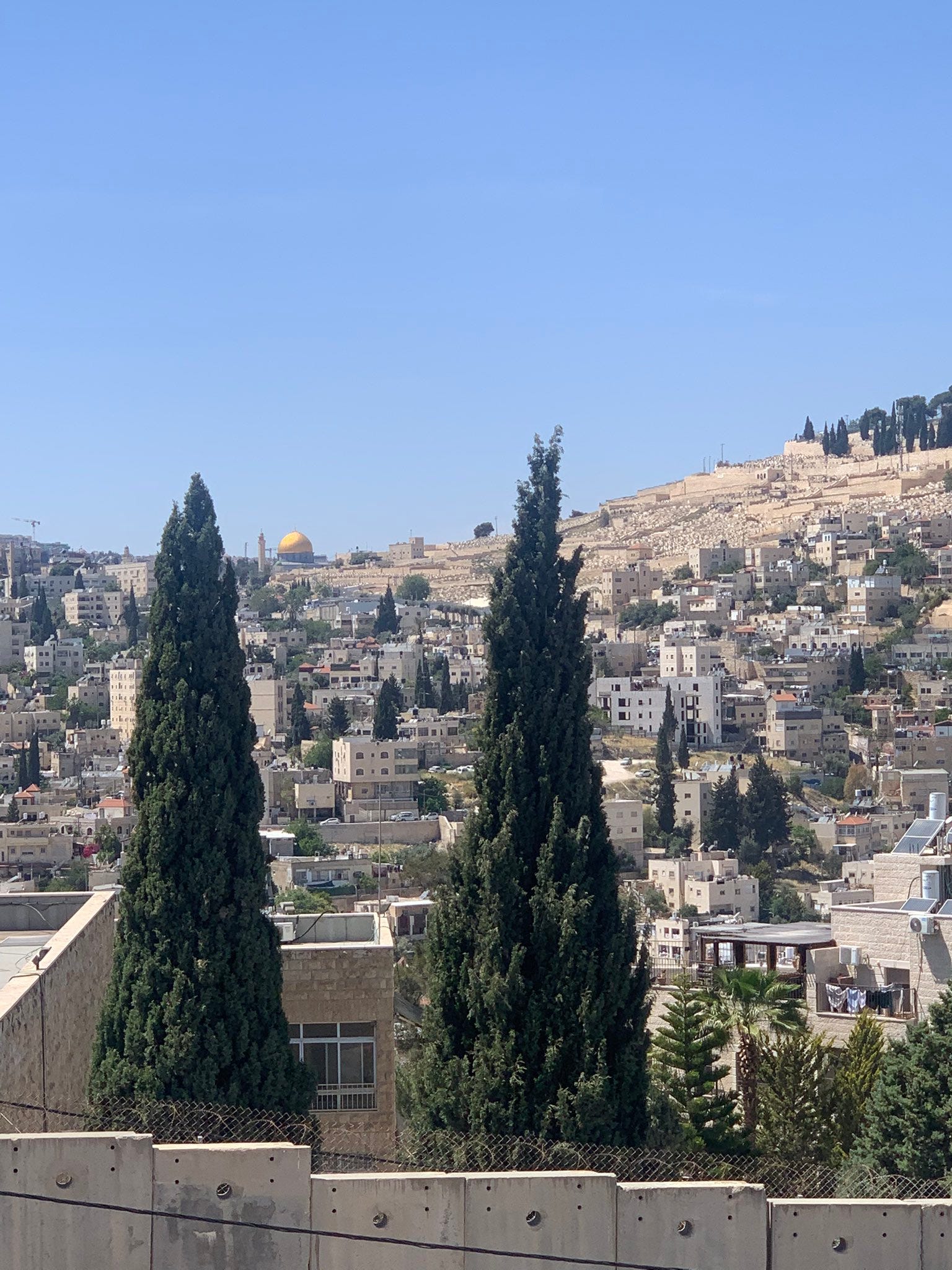
Jerusalem’s urban development under Zionist settler-colonialism is characterized by the imposition of the “30% Arab, 70% Jew” demographic rule (Alkhalili et al., p. 260). This demographic rule has been the guiding axiom for Israeli urban planning in the city, combined with a litany of laws and biopolitical realities that render the native Jerusalemite in a state of “permanent temporariness” (Alkhalili et al., 2014, p. 263). This article aims to analyze the intersection of gentrification, urbanization of capital, and urban planning in Jerusalem and its environs, all in service of Zionist settler colonialism, focusing on the matrix of control that enables such colonial edifices to control Jerusalemites everyday life.
Gentrification is often understood to occur in scenarios that are not settler colonial in nature – it is primarily a phenomenon that replaces a class with another via the demands of capitals. In settler colonial scenarios, that effect is doubled as it can be both an intra-settler gentrification and a type of gentrification that aims to transplant a native people. Capital, in this sense, serves as a primary instrument to expel the Palestinian native population through depriving them of institutions and land as will be seen below.
For Neil Smith, gentrification can be defined as “ the process by which working class residential neighborhoods are rehabilitated by middle class homebuyers, landlords, and professional developers” (Smith, 1982, p. 139). This rehabilitation, by nature, requires the eviction of the working class to make the urban space not only palatable for the middle class, but also readily available. Smith links gentrification to uneven development, positing that “[a]t the urban scale, the main pattern of uneven development lies in the relation between the suburbs and the inner city. The crucial economic force mediating this relation, at the urban scale, is ground rent” (Smith, 1982, p. 145). The dichotomy of the well-off suburb and the working class inner city is important, as ground rent in the latter is cheaper. In addition, Smith makes the connection between investment in transport and accessibility to previously overlooked (and under-developed) areas through what he calls “ribbon development” whereby “new transportation routes alter the pattern of accessibility and hence the ground rent structure, leading to new development that clings exclusively to the new route. Without the new road, railway, or canal, development would not have occurred” (Smith, 1982, p. 145). Ostensibly for the benefit of the entire community, gentrification has the ripple effect of displacing working class neighborhoods and settling the suburban middle class in their place.
David Harvey positions capital as the driving factor of urbanization, whereby the crisis of “overaccumulation” through overproduction of commodities pushes capital into the real-estate sector (Harvey, 1986, p. 171). It is through such a process that capital solves its crisis of overaccumulation (reduced consumption, economies of scale). Not limited to such a crisis, capital and urban planning aims to also solve social crises arising from the disgruntled working classes through both dispersal and “gilding the ghetto,” the former through dispersing the working classes to the suburbs via the proliferation of cheap transportation and housing outside of the singular working class neighborhoods, and the latter through the notion of a “singular community” transcending class lines in an attempt to dilute revolutionary tides. The notions of citizenship and education are examples (Harvey, 1986, p. 179).
Through my interview with Anonymous Interviewee 1, the intersection of class and ideology (Zionism) was prevalent, as well as the weaponization of laws and master plans in order to guarantee control and continued colonization of Jerusalem. This was also a common theme throughout my interview with Anonymous Interviewee 2, as he narrated how any native developmental strategy in Jerusalem is undermined by the Lockean conception of private property ownership. “There’s no Arab business that has substantial capital [in comparison to Israeli businesses,” Anonymous Interviewee 2 remarked. He continued, stating that “when property rights aren’t secure, what are things to do?” Building permits are rarely given to Jerusalemites in the midst of a purposefully convoluted bureaucratic process. According to Anonymous Interviewee 2, the lack of native institutions with native capital has been eroded to the point that as he was taking his driving test with a Palestinian driving school, the instructor complained that a settler driving school based in West Jerusalem has been encroaching on their business and dominating the market.
Expanding upon the issue of building permits, and the use of lawfare and other technologies of force as methods of control, it is vital to mention the case of Kufr Aqab. Nestled between Jerusalem and Ramallah, cleaved by the separation wall and still part of the municipal borders of Jerusalem, Kufr Aqab has become a key destination for Jerusalemites who have married Palestinian from the West Bank. Gary Fields’ technologies of force are crystallized within the spatio-temporal existence of Kufr Aqab: the three technologies of lawfare, cartography, and architecture can be seen in Kufr Aqab with the Center of Life and family reunification laws, the inclusion of Kufr Aqab within the municipal map of Jerusalem, and the physical exclusion of Kufr Aqab from Jerusalem via the separation wall. Touching upon the lawfare, it is clear that the Center of Life and the post-2003 family reunification laws aim to establish a reality where Jerusalemites are displaced to the margins of municipal Jerusalem, but inside territories marked by Israeli officials as being situated “practically” in the West Bank. The status of towns like Semiramis, Bir Nabala, al-Ram, Anata, and Bir Ouneh follow similar trends of placing Jerusalemites within spaces which lack neither Palestinian Authority or Israeli control, cementing a status quo of displacement and uncertainty due to the ambiguous administrative nature of these towns.
Comprador capital is intertwined in these efforts to displace Jerusalemites, working in tandem with the Israeli vision of Jerusalem. This can be seen with Bashar Masri’s Lana al-Quds real-estate project, placed strategically between al-Ram and Beit Hanina, aiming to “[offer] easy access to all areas of Jerusalem and Ramallah as well as to main highways [leading to the territories occupied in 1948]” as described by the Lana al-Quds website (Lana al-Quds Website). As such, it is clear that the Oslo political economy, characterized by real-estate projects, transcends the very borders (un)delineated by the Oslo paradigm. Capital transcends imagined borders while aiming to profit from and cement the status quo. In my interviews with the two anonymous interviewees, the general sentiment surrounding this project was confusion on how Bashar Masri acquired the necessary building permits to establish a neighborhood like this. While describing the project as “sinister,” Anonymous Interviewee 2 noted that it could bring some much-needed relief and convenience for Jerusalemites vis-a-vis the problems of the Center of Life law.
With regards to the intersection of gentrification and settler colonialism in Jerusalem proper, Anonymous Interviewee 1 said: “I feel like Jerusalem is closing in on me, West Jerusalem has been completely Judaized, and day by day I feel like the space that I have as a Palestinian is shrinking.” In 2025 alone, Jerusalem reported 205 home demolition incidents, making up approximately 37-38% of all home demolitions in the areas under report by the UN’s OCHA (OCHA, 2025). Continued settler colonialism stripping the Palestinian of his land, as well as the proliferation of public transport that ties settlements with one another, all of this constitutes an extreme form of gentrification that targets all of Jerusalem in concentration with Israeli capital projects with little to no regard to ground rent. Settler colonialism also forms a ribbon development sphere through bypass roads and light train projects which connect the settlements in Jerusalem and which erode Palestinian autonomous modes of public transportation, with the iconic orange Palestinian mini-buses similar to those found in the West Bank, being illegalized and replaced by the United Transport Company.
One example of the conflagration of urban planning with private capital is the planned hi-tech project in Wadi al-Jawz that aims to transform the foremost industrial area owned by Palestinians in Jerusalem into a Silicon Wadi (al-Arnaout, 2021). Under the guise of providing Jerusalemites with business opportunities in the hi-tech sector, this project aims to continue the tradition of settler colonialism in East Jerusalem while barring Palestinians from acquiring similar economic development projects with native capital. The 2020 Jerusalem Master Plan’s key component is the strengthening of Israeli capital in Jerusalem and the continued colonization of it under the guise of investment projects (Arafeh, 2016). The danger of such a project lies within this intersection of urban planning and private Israeli, as well as international, capital, acting as a claw to tear apart the enclaves of East Jerusalem under the guise of (Israeli) capital development.
Another pertinent point brought up in the interviews is Anonymous Interviewee 2’s account of the Hebrew University and the “internationalization of Jerusalem.” The French Hill, in their view, acts as a global settlement used by international students of the Hebrew University. The importance of education and how it is incorporated within urban planning and urbanization of capital is emphasized in the 2020, the Marom and the 2050 master plans. All of the aforementioned plans aim to transform Jerusalem into a chief educational and tourist hub in the world, further eroding Palestinian institutions in Jerusalem (Arafeh, 2016; Anonymous Interviewee 2, 2024). One can conclude from this analysis the fact that settlements near the city center assume a more internationalized tone akin to European student cities, while nearby Palestinian villages face continued settler expansion under the guise of lawfare, private investment, and urban renewal.
While Harvey’s assertions of urbanization are based on a non-settler colonial context, with all of what it entails in terms of the notions of citizenship and the individual’s relationship to the state, it can be also placed in the context of Jerusalem. Overaccumulation may be irrelevant in this framework as Israeli capital moves beyond the scope of traditional laws of accumulation, but the concepts of dispersal and gilding the ghettos are important to emphasize. Both anonymous interviewees stated that Israel tries to combat native institutions in Jerusalem while posing Israeli institutions as the more lucrative alternative for lower middle class and working class Jerusalemites through enrolling and employing them in cultural centers, state schools, and universities while making it harder for Jerusalemites to pursue a Palestinian education. Thus, gilding the “Palestinian ghetto” aims to turn Jerusalem “into another dakhel [territories occupied in 1948] in terms of reliance on Israeli institutions.” Anonymous Interviewee 2 expressed similar sentiments when asked about the role of Palestinian institutions in Jerusalem. “What institutions?” they remarked, stressing that working within the paradigms circumscribed by the Israeli authorities is the only possible way to make a living in Jerusalem.
In conclusion, this article touched upon several methods of control characterized by the interlocking processes of gentrification, urbanization of capital, and settler colonialism. From the weaponization of administrative blackboxes like Kufr Aqab for the methodical displacement of Jerusalemites and the erosion of native institutions of Jerusalem, as well as the intervention of Israeli capital investment (and Oslo real-estate moguls like Bashar al-Masri) in Zionist urban planning. In addition, this article has shown how “the internationalization of Jerusalem” has been a key point permeating the Israeli master plans for the city. The only relationship that Jerusalemites have to the bureaucratic settler colonial apparatus, according to Anonymous Interviewee 2, is the dynamic of a “permanent resident tax-payer – they only look at you as a [disposable] tax-payer.”
Works Cited:
Fields, G. (2017). Enclosure: Palestinian Landscapes in a Historical Mirror. University of California Press.
Harvey, D. (1985). The Urbanization of Capital: Studies in the History and Theory of Capitalist Urbanization. B. Blackwell.
Smith, N. (1982). Gentrification and Uneven Development. Economic Geography, 58(2), 139–155. https://doi.org/10.2307/143793.
Al-Arnaout, A. (2021). A “Silicon” Disaster Threatening Wadi al-Jawz. Jerusalem Quarterly, 85. 125-131. https://www.palestine-studies.org/sites/default/files/jq-articles/A%20%E2%80%9CSilicon%E2%80%9D%20Disaster%20Threatening%20Wadi%20al-Joz.pdf.
Arafeh, N. (2024, February 14). Which Jerusalem? Israel’s Little-Known Master Plans. Al-Shabaka. https://al-shabaka.org/briefs/jerusalem-israels-little-known-master-plans.
Lana al-Quds Website.
Alkhalili, N., Dajani, M., & De Leo, D. (2014). Shifting realities: dislocating Palestinian Jerusalemites from the capital to the edge. International Journal of Housing Policy, 14(3), 257–267. https://doi.org/10.1080/14616718.2014.933651.
United Nations Office of Humanitarian Affairs (OCHA). (2025). Home Demolition Data.