

They Prayed on the Lawns Instead
Inside the Israeli campaign to disrupt every Palestinian holiday — and why it keeps failing.

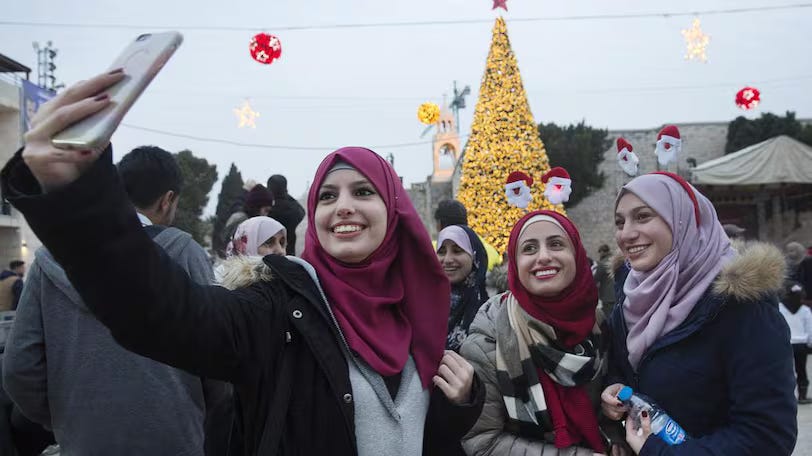
Holidays in Palestine are special in a way that is unlike holidays elsewhere in the world. In Bethlehem, a city that boasts a sizable Muslim and Christian Palestinian population, it can sometimes feel that in the years before the US-Israeli genocidal aggression on Gaza, the holidays didn’t end. For example, Christmas preparations begin at the beginning of December and festivities do not cease until after the last Christmas, celebrated by the Armenian Church in Bethlehem on January 18. This year, Ramadan began less than a month later with Lent alongside it, followed by Palm Sunday, and on their way now are Easter and Eid Al-Adha.
But holidays are not different because they feel endless — rather, they feel endless because of the myriad of sects and religions represented, and their shared, public expression. It doesn’t matter if you are Muslim, Catholic, Armenian Orthodox, or none of the above — everyone in the city comes to see the Christmas tree lit up and take selfies in front of it. Everyone marvels at the Ramadan decorations scattered throughout town and lines up to purchase katayef from their local vendor. Everyone is happy to see photos of their neighbors’ beautiful, smiling faces in the Al Aqsa compound.
Unfortunately, something else that is shared is the knowledge and experience of how zionist policies work to discourage celebration, disrupt holidays, and minimize or prevent the exercise of centuries-old traditions. This is an ordeal well-known across religions and sects. As escalations against Palestinians continue everywhere, Ramadan (like Christmas) arrived with a question in the air this year: what will the zionist state do to try to disrupt this important holiday, as it does every year? This Ramadan, the answer came — at least in part — in a form that the whole world has witnessed, through the US-Israeli War on Iran.
Immediately following US-Israeli strikes on Iran about ten days into the month of Ramadan, Israeli authorities forced the closure of the Al Aqsa Mosque compound, usually packed with worshippers from all over the country during this period. This move, framed as a “security measure”, is the first time the Al Aqsa Mosque has been forced closed by Israeli authorities since October 2014 (excluding Covid-related closures), an act of collective punishment following an assassination attempt on Yehuda Glick, a far-right zionist rabbi. The mosque was also temporarily closed by Israeli forces following the occupation of East Jerusalem after the 1967 War, after which Israeli authorities took over the “security” administration of the holy site. Neither closure lasted as long as this one has.
Among the shortcomings of these closures, ostensibly informed by the lack of adequate shelters in the Old City in general and these religious sites specifically, is that Palestinian worshippers from East Jerusalem or traveling from the West Bank likely are not much safer in their own neighborhoods. Across historic Palestine, Palestinian communities are criminally underserved when it comes to the availability of public shelters or safe rooms, and those in East Jerusalem are no exception with almost nowhere safe to retreat as sirens warn of incoming rockets. In Palestinian cities, towns, and villages across the West Bank, there are also no safe rooms or shelters in general.
Israeli authorities have now extended the closure until at least April 15, 2026. While the stated reason is “public safety” in the midst of the US-Israel-imposed War on Iran, many Palestinians have expressed their doubts that this is the true motivation guiding this decision. Concerns range from the belief that this is an opportunity for zionist authorities to increase their control over the religious site to conspiracy theories that zionists may execute a false flag attack on Al Aqsa compound and/or the Church of the Holy Sepulchre in the midst of Iran’s missiles (or missile fragments) landing in the area. These fears are escalated by incidents of settler groups reportedly circulating AI-generated videos depicting the bombing of other Muslim holy sites such as the Dome of the Rock, and further heightened by the reality that Israel has amplified its control over important holy sites significantly this year alone, including the Ibrahimi Mosque (Tomb of the Patriarchs). All the while, Israeli politicians repeat their threats to “rebuild the Third Temple” atop al-Haram al-Sharif.
Meanwhile, special privileges have been granted to Jewish worshippers and religious leaders, in some cases. Though access to the Western Wall (Buraq Wall) has been closed, zionist authorities are allowing groups of 50 to pray in an enclosed area beside the plaza. Israeli authorities have also announced their intention to allow 50 rabbis into the Western Wall plaza on April 5 to perform a Passover blessing.
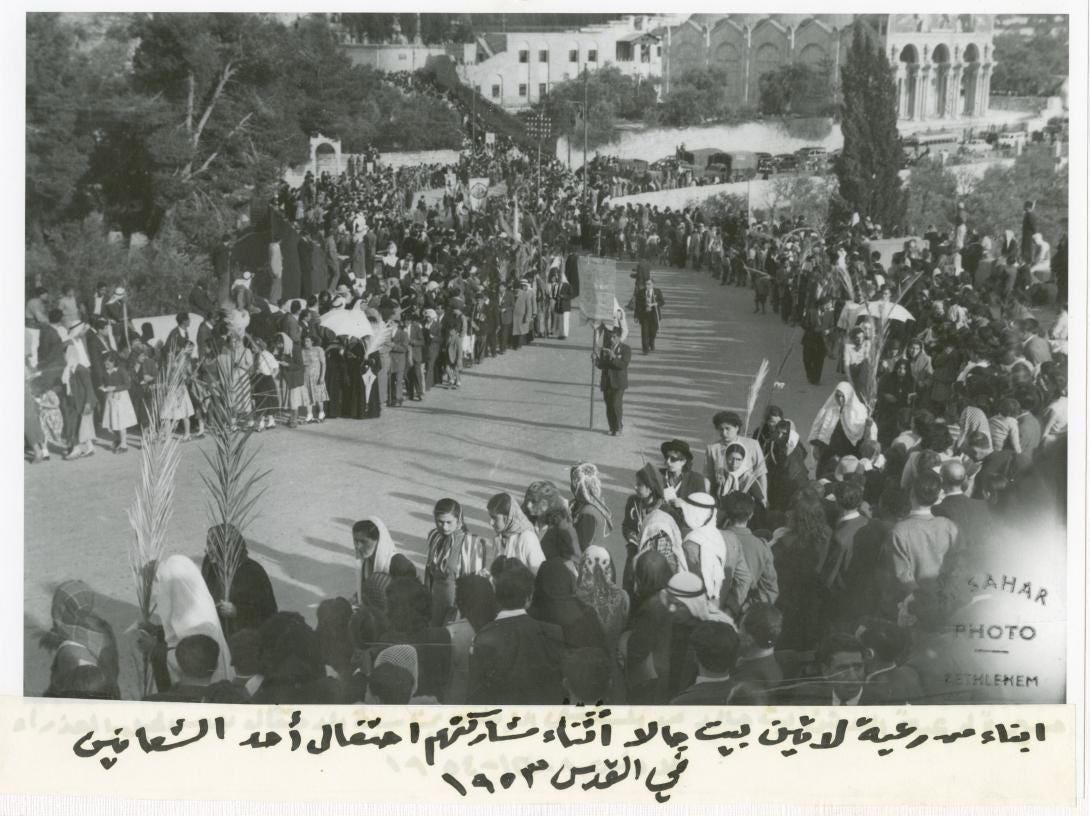
As the wartime closures extended to other religious sites in the Old City of Jerusalem, including the Church of the Holy Sepulchre and the Western Wall, Israeli authorities reportedly sealed off areas of the Old City, preventing non-residents from entering and imposing a series of checkpoints to inhibit access to all three of these sites. But on March 29, Palm Sunday, Christian Palestinians were also prevented from marching from the Mount of Olives through the Old City, as they have for hundreds of years. Palm Sunday is usually celebrated by as many as hundreds of thousands of Christians in Palestine — Palestinians and internationals alike.
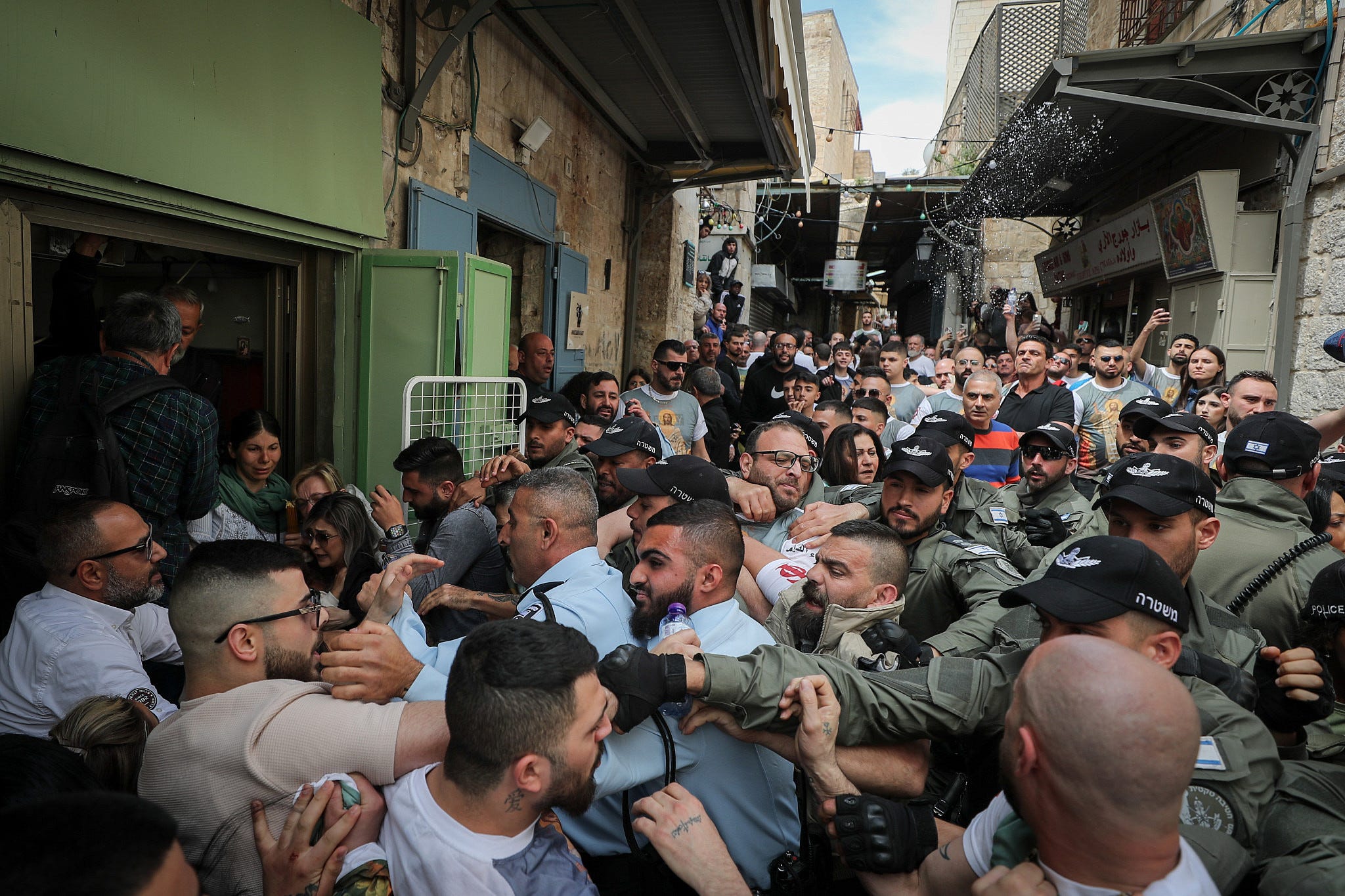
Despite local priests holding private masses every Sunday since the closures began on February 28 in accordance with Israel’s “security” procedures, Israeli authorities prevented Catholic priests from entering the church on Palm Sunday, claiming they had informed church authorities that no mass would be allowed to take place on the holiday. This disruption has instigated a response from the international community — notably, a much more significant response than the more than twenty days of closure imposed on Palestinian Muslims for most of Ramadan and all of Eid al-Fitr celebrations.
The disruption of the mass was an attempt coordinated to prevent the small number of Palestinian Christians and international clerics from celebrating Palm Sunday in Jerusalem, even under severely restricted conditions. Though other Sunday services have not been a problem, the commemoration of the holiday was contested, revealing the farcical nature of Israeli security procedures and their application. When it comes to the celebration of Palestinian holidays — Christian or Muslim — Israeli authorities always have the same response: suppression.
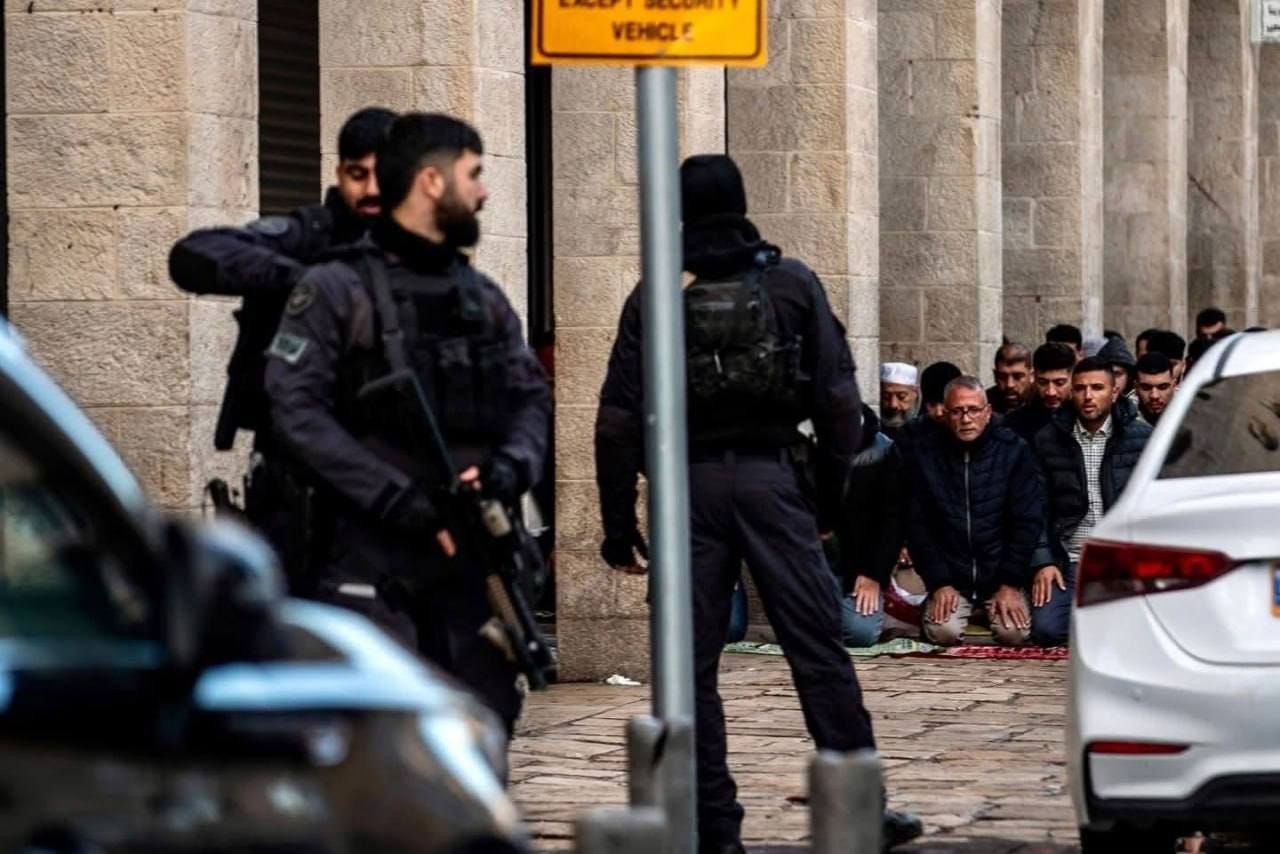
The Catholic priests’ experience on Palm Sunday echoes the reality that Palestinian Muslims in Jerusalem faced following the closure of Al Aqsa. Some community members, denied access to the mosque and the community of worshippers that should be gathered there, met outside of the old city to pray taraweeh prayers on its lawns, only to be met by Israeli forces’ assaults. They returned the next day. Meanwhile, elsewhere in Jerusalem, Israeli forces disrupted prayers, reportedly storming a mosque during prayer time to abduct worshippers on the 27th day of Ramadan.
These closures and assaults on adjusted worship services in the midst of a war to which Palestinians have been subjected by foreign occupiers are exacerbated by the closures imposed throughout the West Bank, settler attacks, random abductions, state violence, home demolitions, and much more. Increased violence, arbitrary closures of towns, villages, and roadways, and pop-up checkpoints work to prevent families from visiting one another during holidays built around community.
But long before the start of this war, and even long before October 2023, Ramadan in particular and Palestinian holidays in general have been periods during which Israeli forces and the state itself escalate violence against Palestinian communities. This means that not only are the state’s attacks on Palestinian religious observance regular and ongoing, but also that Palestinian worshippers are well-attuned to finding ways to celebrate despite zionist policies and restrictions.
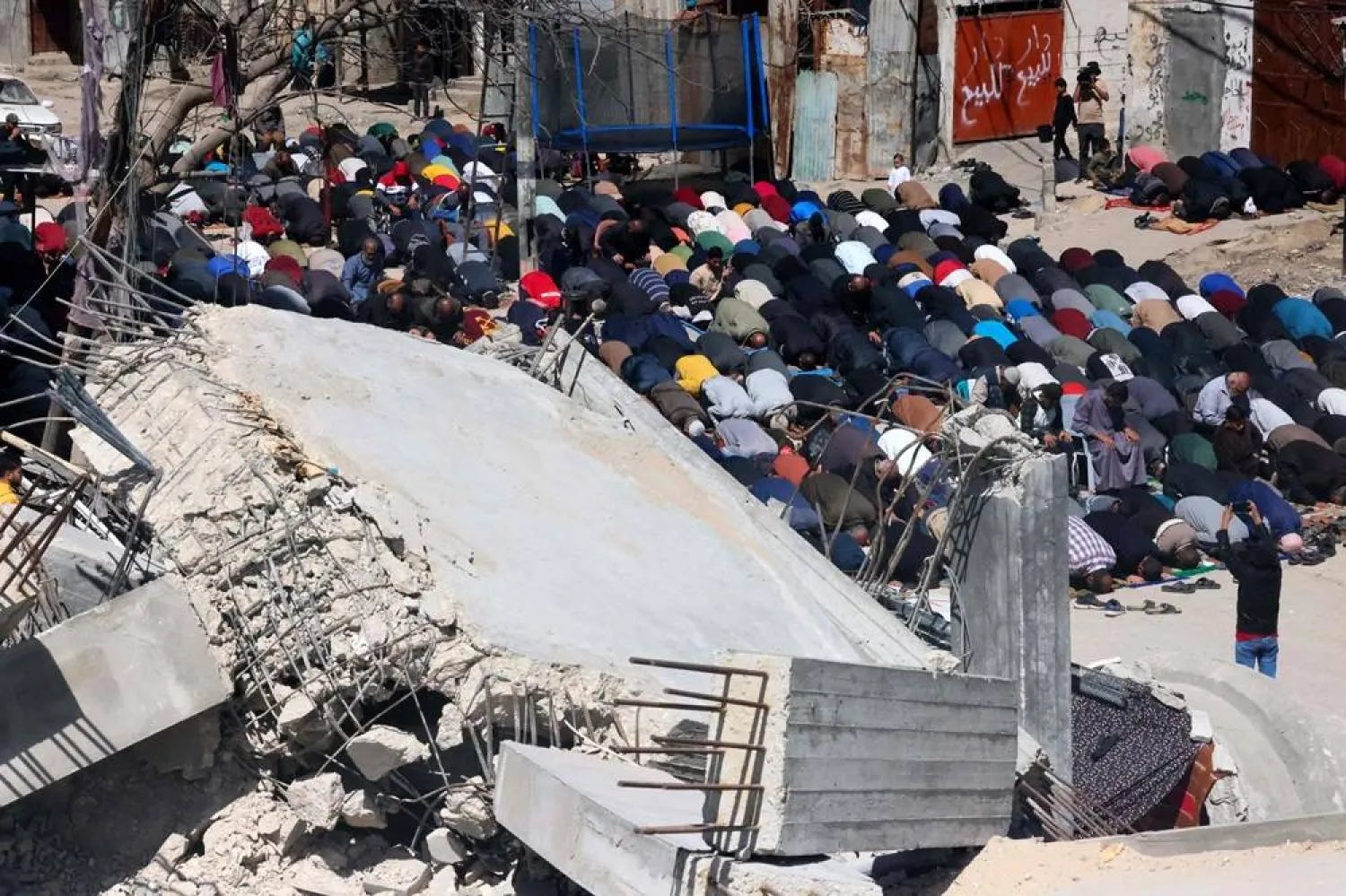
After being prevented from reaching the Church of the Holy Sepulchre for a private mass on Palm Sunday in Jerusalem this year, the priests held their mass in a nearby church instead, and later prayed for peace on the Mount of Olives. Like Muslim worshippers praying on the Old City lawns and neighborhood mosques over the last month, they found ways to commemorate Palm Sunday despite closures, uneven applications of the so-called emergency regulations, targeted attacks on their rights, and forcibly dispersed worshippers.
These acts are not just about ritual and commemoration of religious holidays — things that are important on their own. The decisions religious figures and regular people make, to exercise their faith anyway, to find alternatives that enable their worship, to make community happen on their own terms as much as it is possible — these are also acts of refusal to be bullied into submission by those who wish for Palestinian elimination and work toward this end.
In the midst of an ongoing genocide and a war for control over the greater region, the refusal of those right under the thumb of occupation to forget, or give up, or abdicate aspects of a long and rich cultural inheritance is an example for the rest of the world. It is not just refusal; it is the enactment of a cherished heritage and its preservation for the next generation. What makes it so special in Palestine is that not only is it happening all the time — it’s happening in public. And whether we are doing it ourselves or cheering it on, we embolden each other to continue doing it.