

Zionists push to move Pentagon offices to Israel…no really
A piece of the Pentagon headed for Israeli soil, 465 dunams seized in the hills, and church land taken in Jerusalem all in one week.

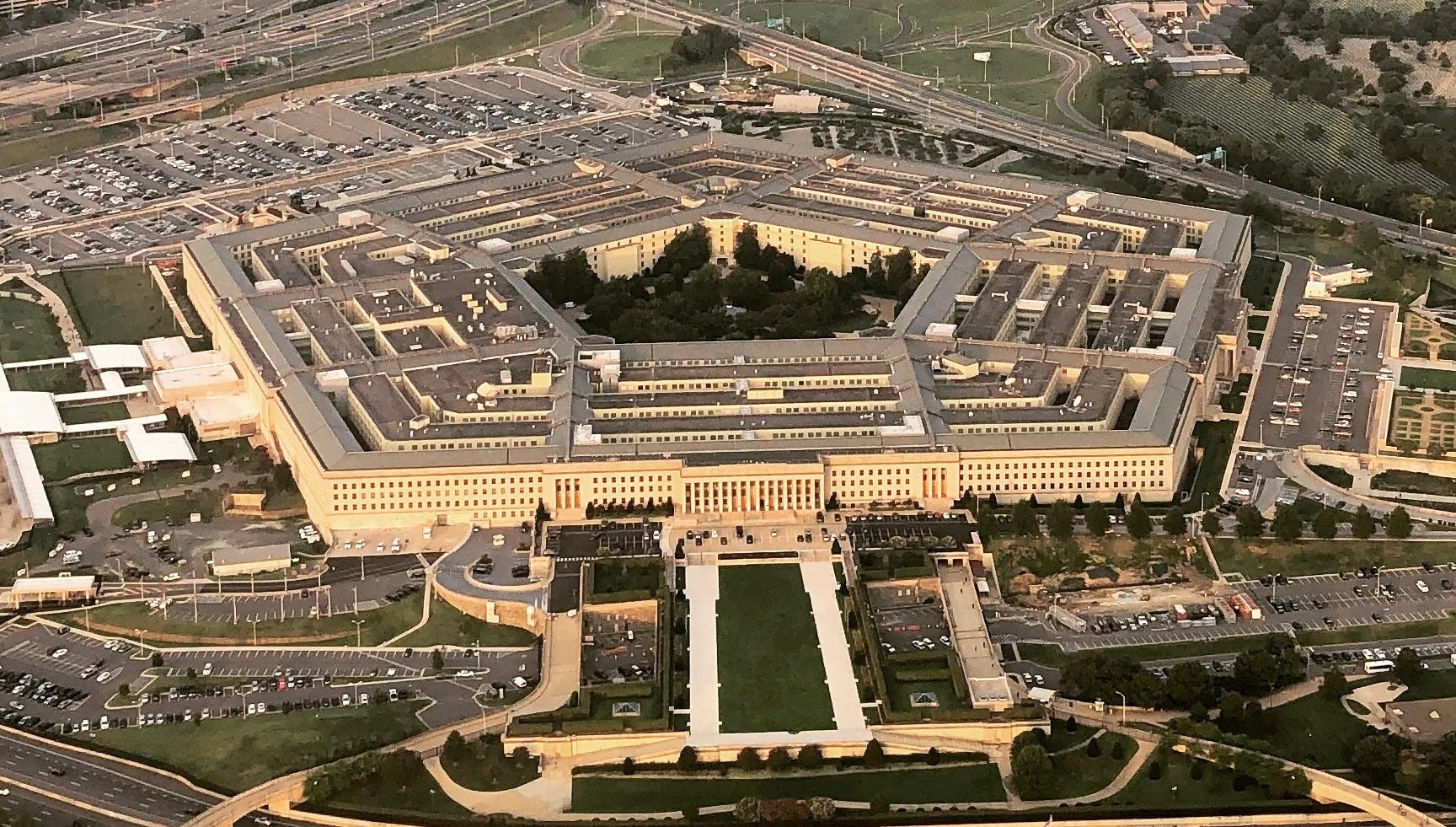
This week, Israel captured 465 dunams and claimed it as “state land” to legalize a settlement outpost in the West Bank. The Jerusalem municipality annexed church property in Jerusalem. In Washington, the Senate wrote a US-Israel defense partnership into its budget on terms a future Congress would struggle to undo — and House members went further still, filing an amendment to plant an actual Pentagon office on Israeli soil. The zionist state forces demolished homes and killed Palestinians across the West Bank, and the movement has shown no signs of relenting unless the individuals and institutions financing and operating the settler project are held accountable.
465 dunams for Haroeh
On June 23, 2026, the Israeli Civil Administration declared 465.4 dunams around the villages of Sinjil and Luban a-Sharqiya, south of Nablus, to be “state land”. The built-up area of the Haroeh outpost covers roughly 100 dunams. The declaration is more than four times that amount, pushing the outpost well beyond its current footprint, capturing more Palestinian land. Palestinian landowners have 45 days to file objections to a system that is specifically designed to displace them from their lands.
Haroeh was built in 2002 on survey land, and demolition and evacuation orders followed almost at once. None were enforced. The cabinet decided to legalize the outpost in February 2023, and this declaration is the next step: once land is “state land,” it is allocated for planning and construction, and always allocated to Jewish settlers, never to Palestinians. A 2017 declaration affecting the status of the land next to the outpost left out the plots the houses stand on, which kept it from being legalized; this move is meant to close that gap by turning it all into “state land”. Since December 2022, about 27,119 dunams have been declared state land by the Zionist state.
Gardening orders in Silwan
In East Jerusalem, the municipality went after land belonging to the Greek Orthodox Patriarchate. On June 15, 2026, municipal staff, accompanied by police and heavy machinery, removed equipment, destroyed trees belonging to the Greek Orthodox Patriarchate, and erected a fence. The work continued throughout the week. The stated basis was a “gardening order” from April 2019 that allows the municipality to take control of land it deems neglected; similar orders have been used on about 200 dunams in the Wadi Rababa area in recent years.
The Patriarchate sued. At a June 18, 2026 hearing, the municipality told the Jerusalem Magistrate’s Court that it does not recognize church ownership and treats the uncultivated land as state land. A Nature and Parks Authority representative said the aim was a permanent presence on the site, “every day.” The court issued no injunction and gave the two sides a week to talk.
Control, not aid
In Washington, for the broader zionist movement, the work is legislative. The Senate’s defense authorization for fiscal year 2027, S. 4784, would direct the Pentagon to build a defense-industrial partnership with Israel and stand up a US-Israel Defense Technology Cooperation Initiative, folding Israeli-origin systems into US programs of record — the initiative that survived a House Armed Services markup earlier this month as Section 224. On the House bill, HR 8800, more than 1,335 floor amendments were filed; several, from Rashida Tlaib and Thomas Massie, would strip the initiative out. Even Bernie Sanders, a liberal zionist, warned it should be cut from the Pentagon budget, arguing it would hand Israel “more military integration than any NATO ally.”
The money is in the same bills: up to $300 million for Israeli cooperative missile-defense programs, $100 million each for joint counter-drone and subterranean-warfare work. Netanyahu has described the goal plainly — a shift from aid to control — a framework that a future Congress would struggle to unwind.
Of the 1,335 amendments filed to the FY27 National Defense Authorization Act (H.R. 8800), only about a dozen touch U.S.-Israel military integration, and the bloc working to deepen it is, of course, bipartisan. Most of that integration is already written into the base bill: the U.S.-Israel Defense Technology Cooperation Initiative (Sections 219/224), the Abraham Accords Defense Cooperation Initiative (Section 1707), and the war-reserve stockpile provisions (Sections 1221-1223), a core that survived House Armed Services Committee markup by a vote of 44-12. So the members advancing it mostly leave those sections intact and just bolt on more. Josh Gottheimer (D-NJ) is the most active, filing amendments for a joint U.S.-Israel artificial-intelligence and quantum-computing research program and a sense-of-Congress measure backing cooperation in space (what a nightmare). Mike Lawler (R-NY) moved to reauthorize the War Reserve Stocks-Israel authority through 2032 and co-sponsored the space language; Nicole Malliotakis (R-NY) leads an eight-member group establishing a U.S.-Israel-Greece-Cyprus “3+1” security program; and Zach Nunn (R-IA) and Don Davis (D-NC) pair up with the proposal that goes furthest of all.
That proposal, Amendment #319, is a two-page measure that would plant a piece of the Pentagon on Israeli soil. Titled “Establishment of Defense Innovation Unit Office in Israel,” it directs the Secretary of Defense to seek to open an office of the Defense Innovation Unit — the Pentagon’s commercial-technology arm, which scouts and buys cutting-edge systems from private industry — somewhere inside Israel within 180 days of the bill becoming law. And that purchasing mandate is the whole point: the DIU exists to spend U.S. defense dollars on commercial tech, so an office in Israel is purpose-built to route that money to Israeli firms and the Israeli Ministry of Defense. US taxpayers would foot the bill for setting up the office, then foot it again for the contracts it hands out — underwriting the research, the procurement, and the private companies on the other end. It is a subsidy pipeline with a Pentagon letterhead, paid for by people who will never be asked whether they wanted to fund it, which is essentially how it exists today, but with an Israeli P.O. Box.
New military orders
Israeli authorities issued multiple stop-work orders, essentially a precursor to a home demolition, over the last week. Several stop-work notices were posted on homes and agricultural structures in Wadi Rahhal, south of Bethlehem, and forces entered Beit Surik, northwest of Jerusalem, to distribute stop-work notices to several houses for lack of a permit. South of Jenin, the Civil Administration issued a stop-work order against six homes in the western part of Silat ad-Dhahr, of which five are inhabited, and one is still under construction.
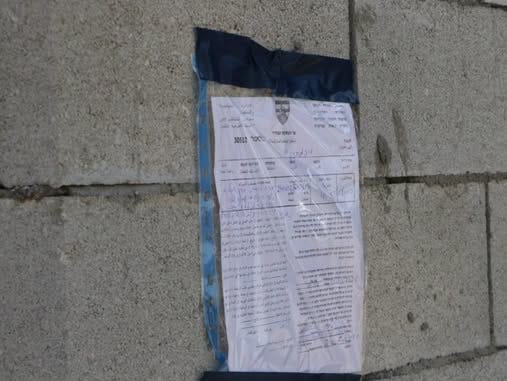
This demolition order was served on Jawad Abu Ramouz for his home in the al-Bustan neighborhood of Silwan, East Jerusalem, June 21, 2026. Order document via Palestinian field documentation.
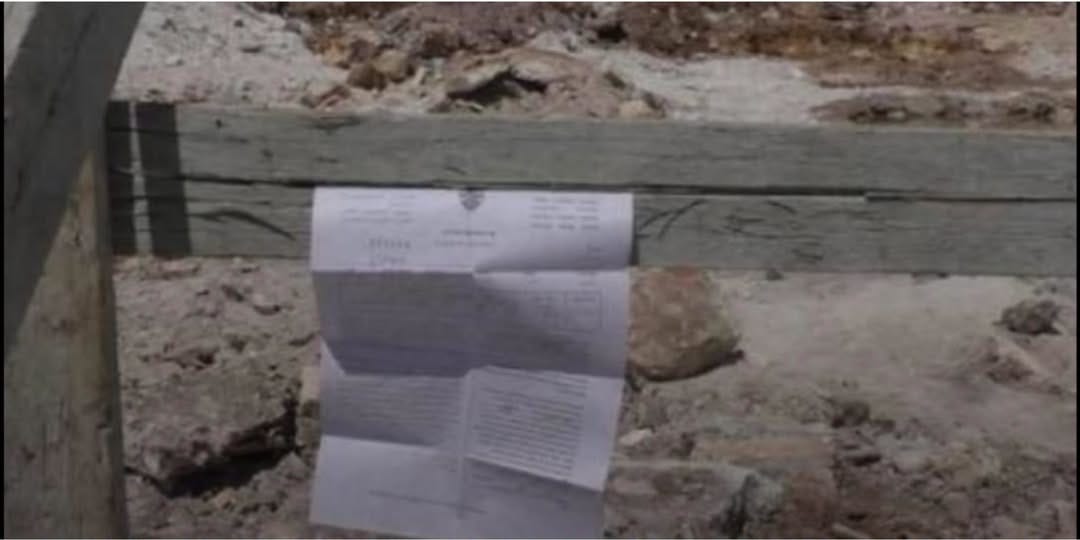
Stop-work notice posted on homes and agricultural structures in Wadi Rahhal, south of Bethlehem, June 21, 2026.
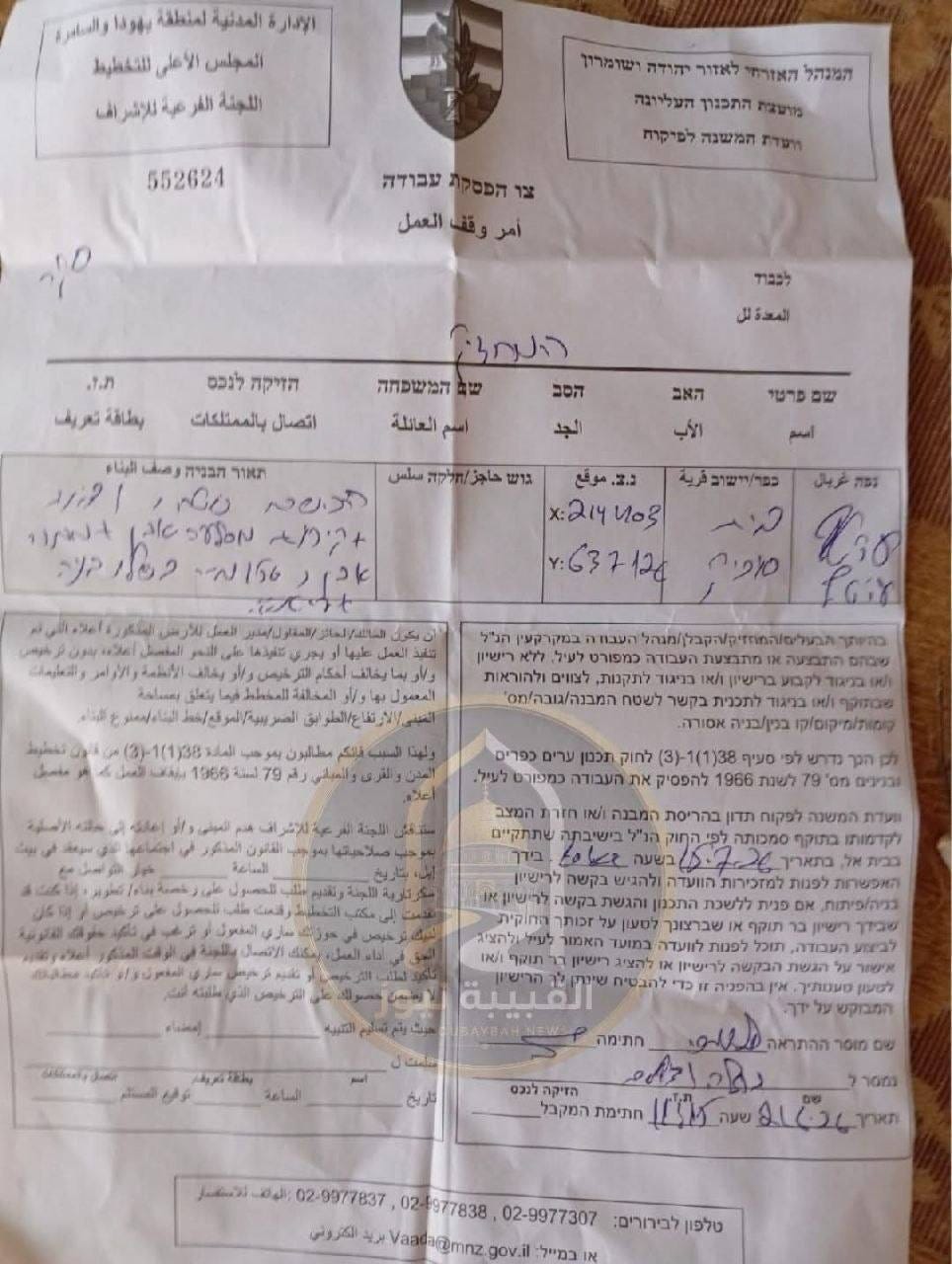
Stop-work order, served during a raid on Beit Surik, northwest of Jerusalem, June 21, 2026.
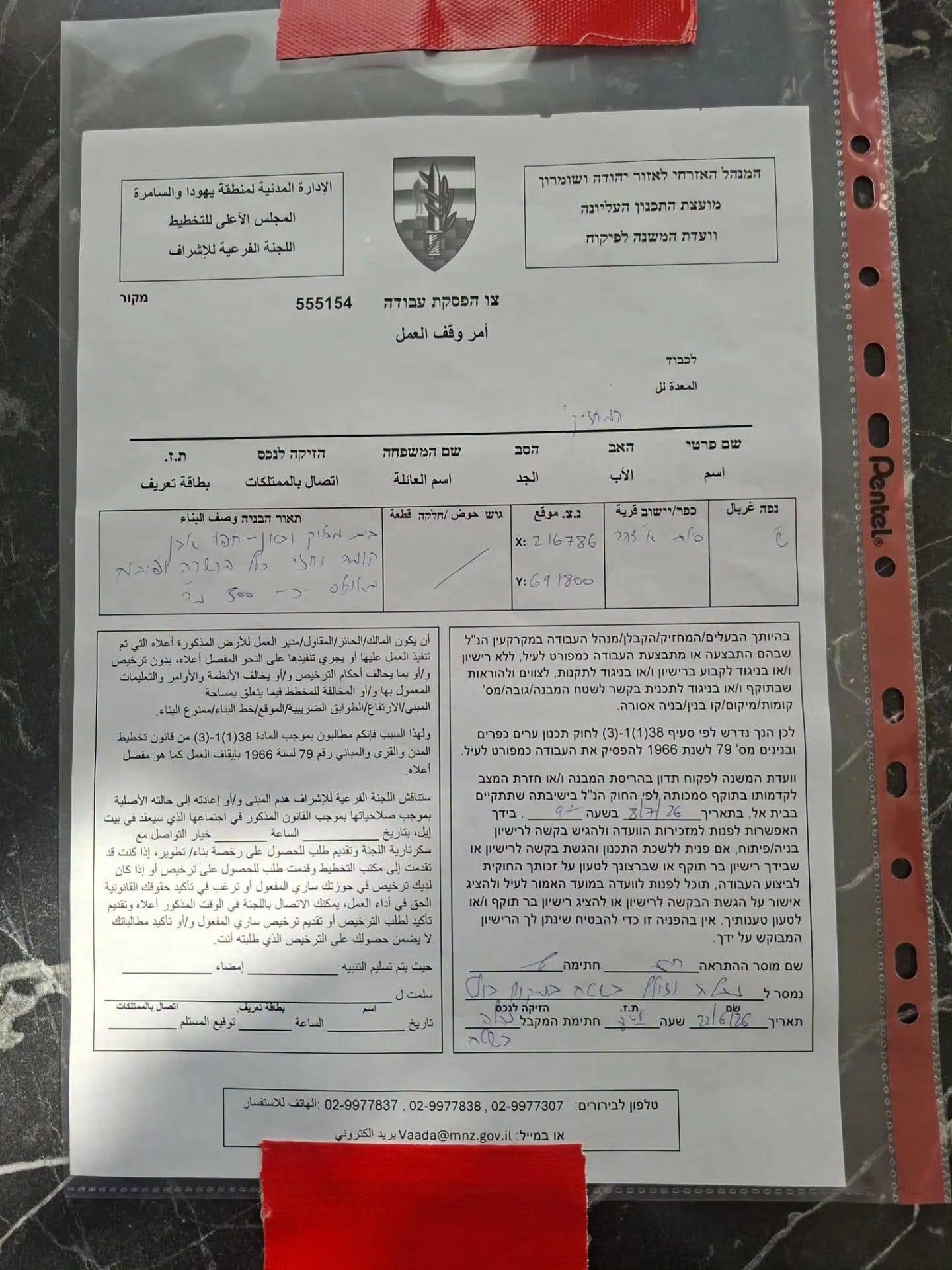
Stop-work order, served on six homes in the western part of Silat ad-Dhahr, south of Jenin, June 22, 2026.
Demolitions this week
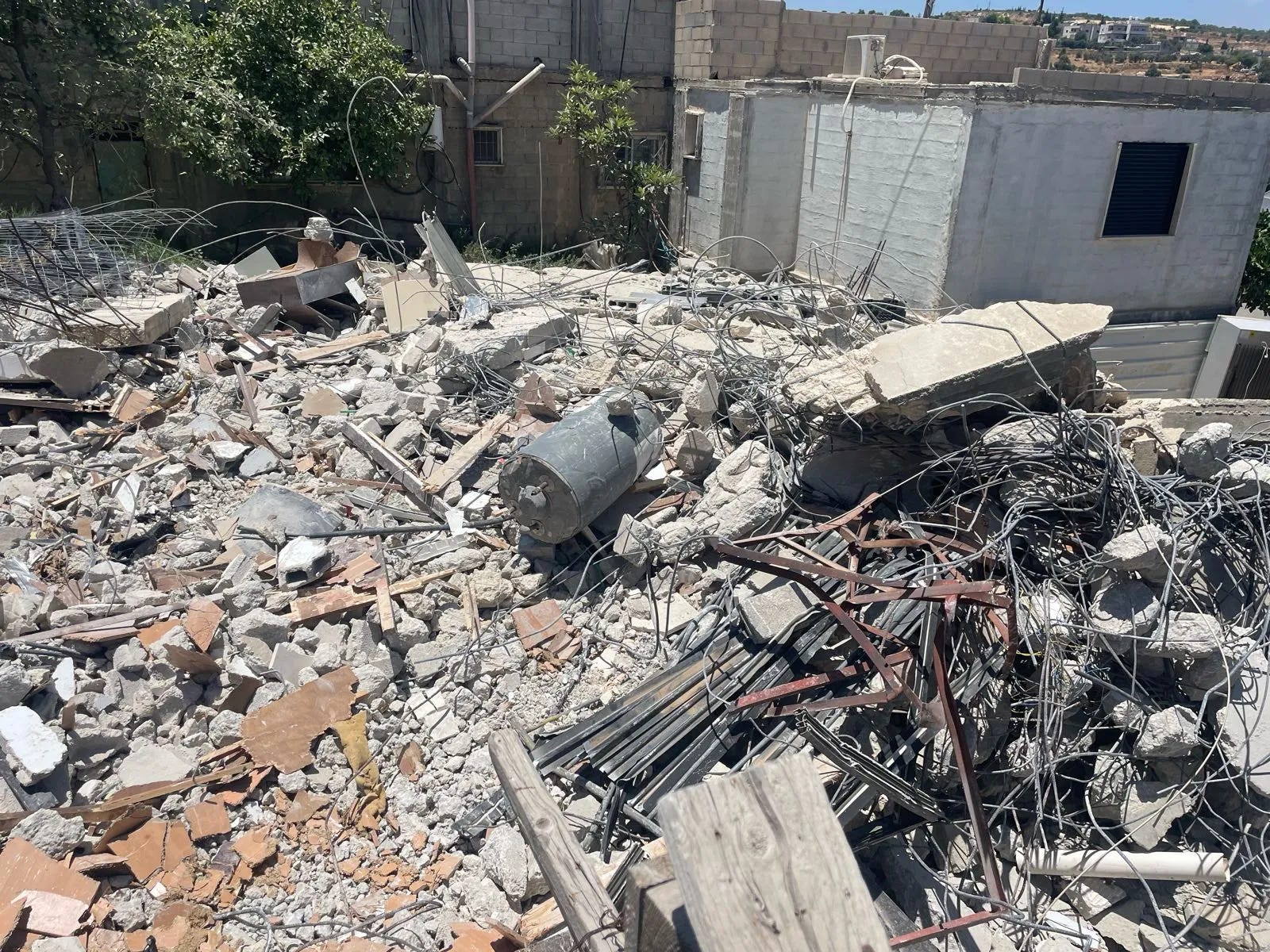
Al Khadr, Bethlehem (June 22, 2026): Two inhabited homes and their outbuildings near the northern entrance of Efrat settlement were demolished in the Umm Rukba area for lack of a permit, displacing two families, eleven people in total.
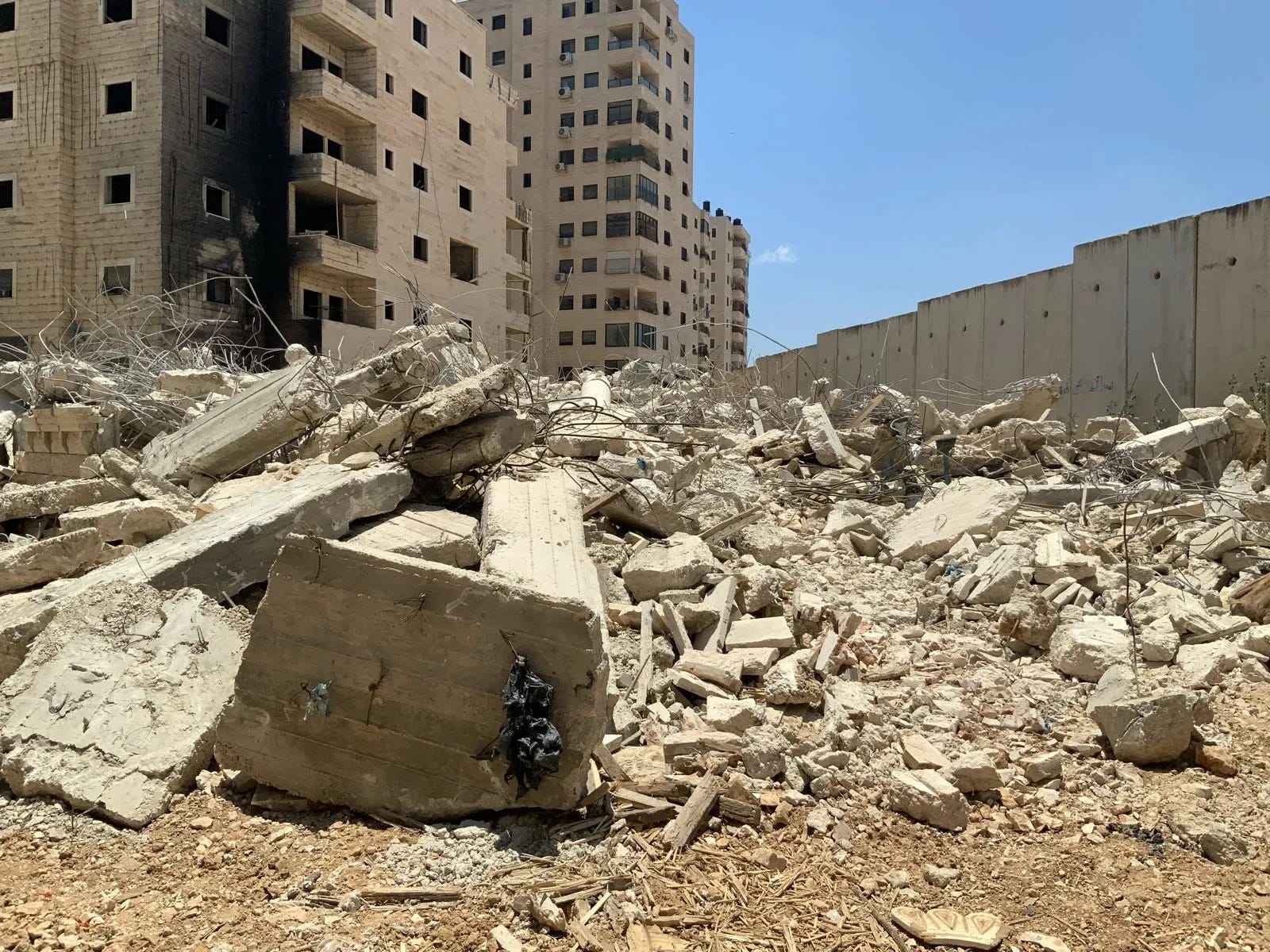
Kafr ’Aqab, Jerusalem (June 22, 2026): A 16-hour operation in the Al Touri area demolished three multi-story buildings and bulldozed the area’s only access road, severing the water, electricity, and sewage lines; seven people were displaced, and about 2,645 were affected.
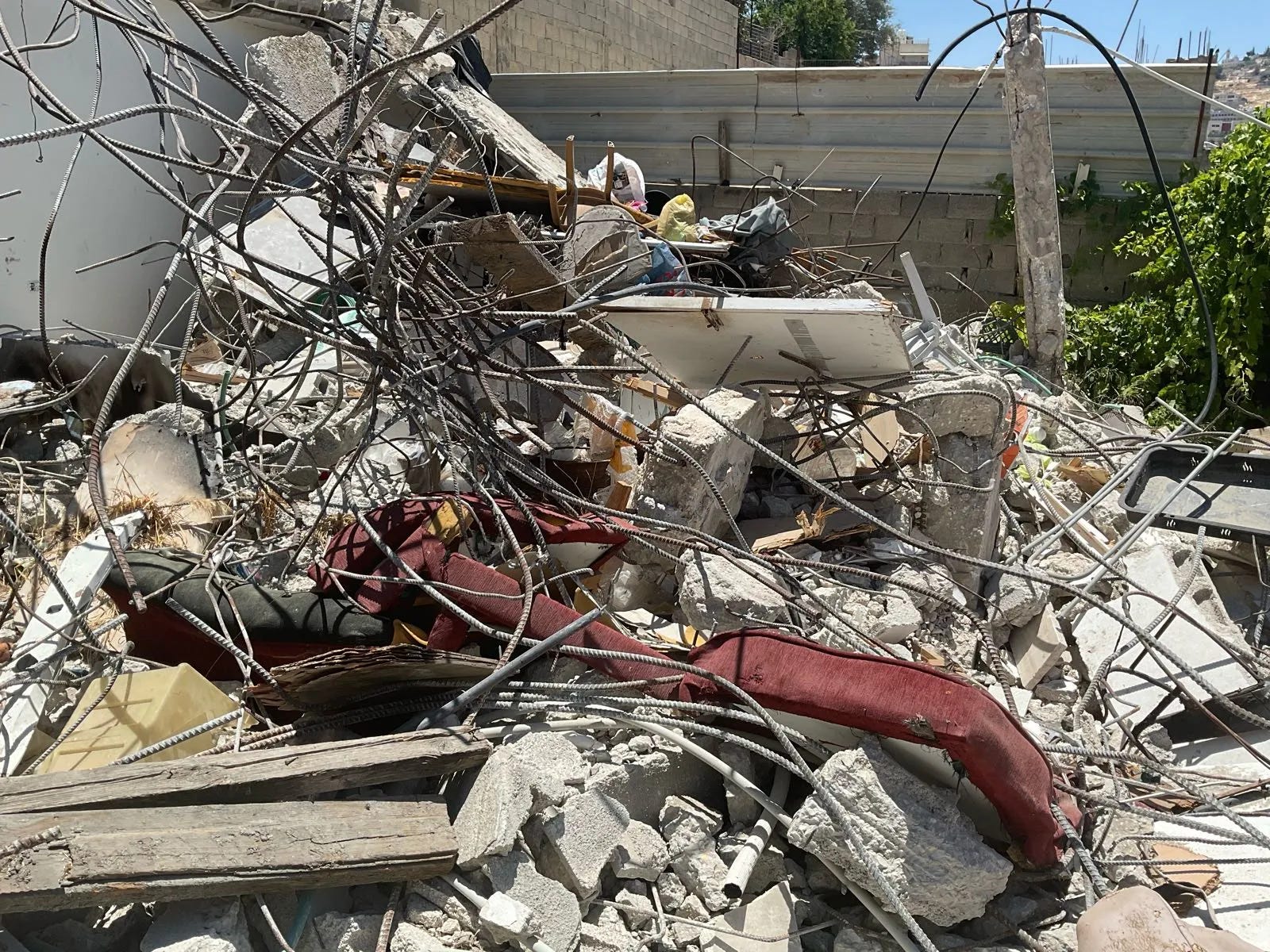
Ras al ’Amud, Jerusalem (June 22, 2026): A family was forced to demolish its own 70-square-meter home for lack of a permit, displacing five people, three of them children.
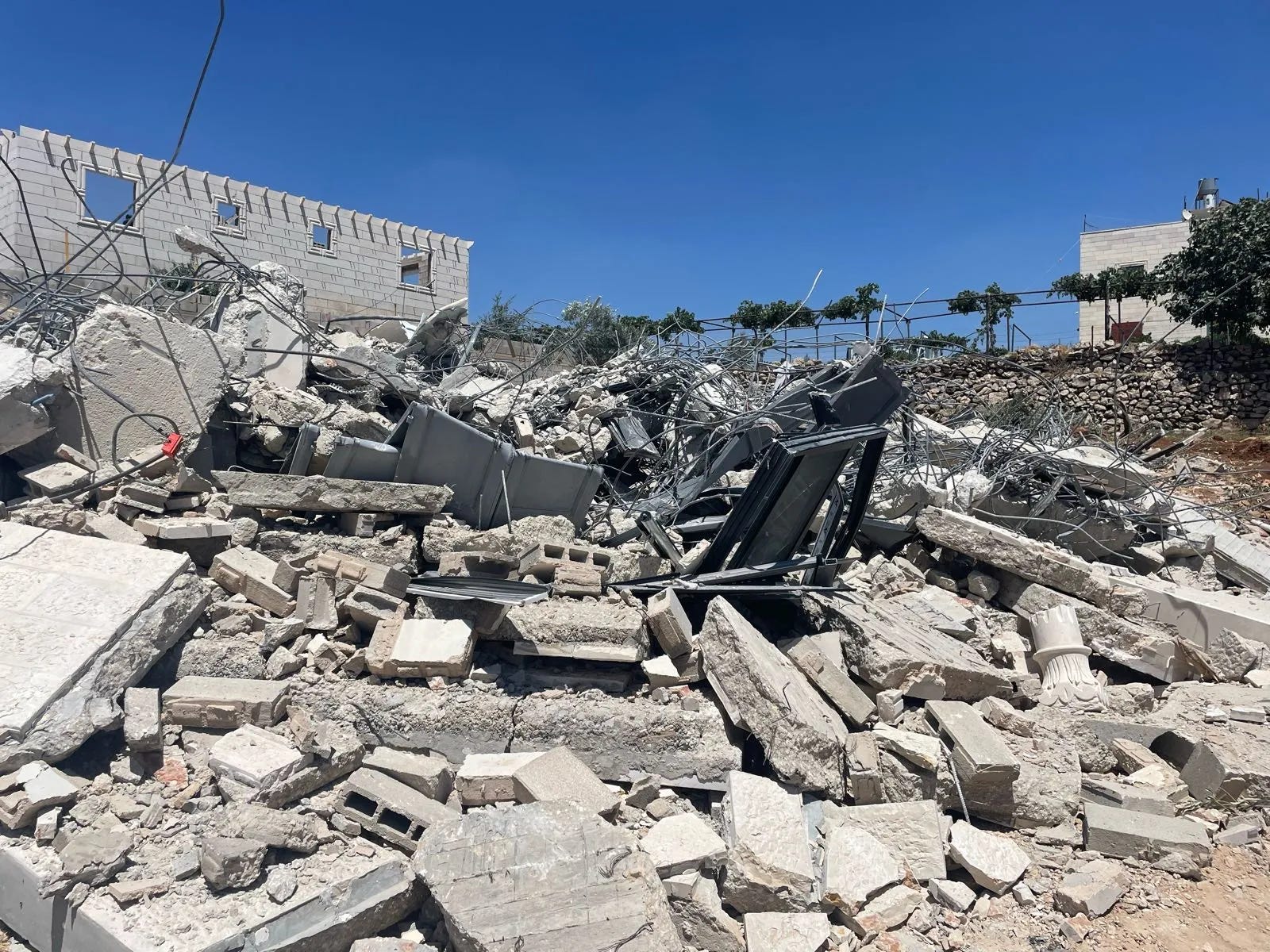
Qalqas, Hebron (June 23, 2026): An inhabited two-story house and a water cistern south of Hebron were demolished for lack of a permit, displacing a family of seven; soldiers struck the owner and his mother and fired tear gas during the operation.
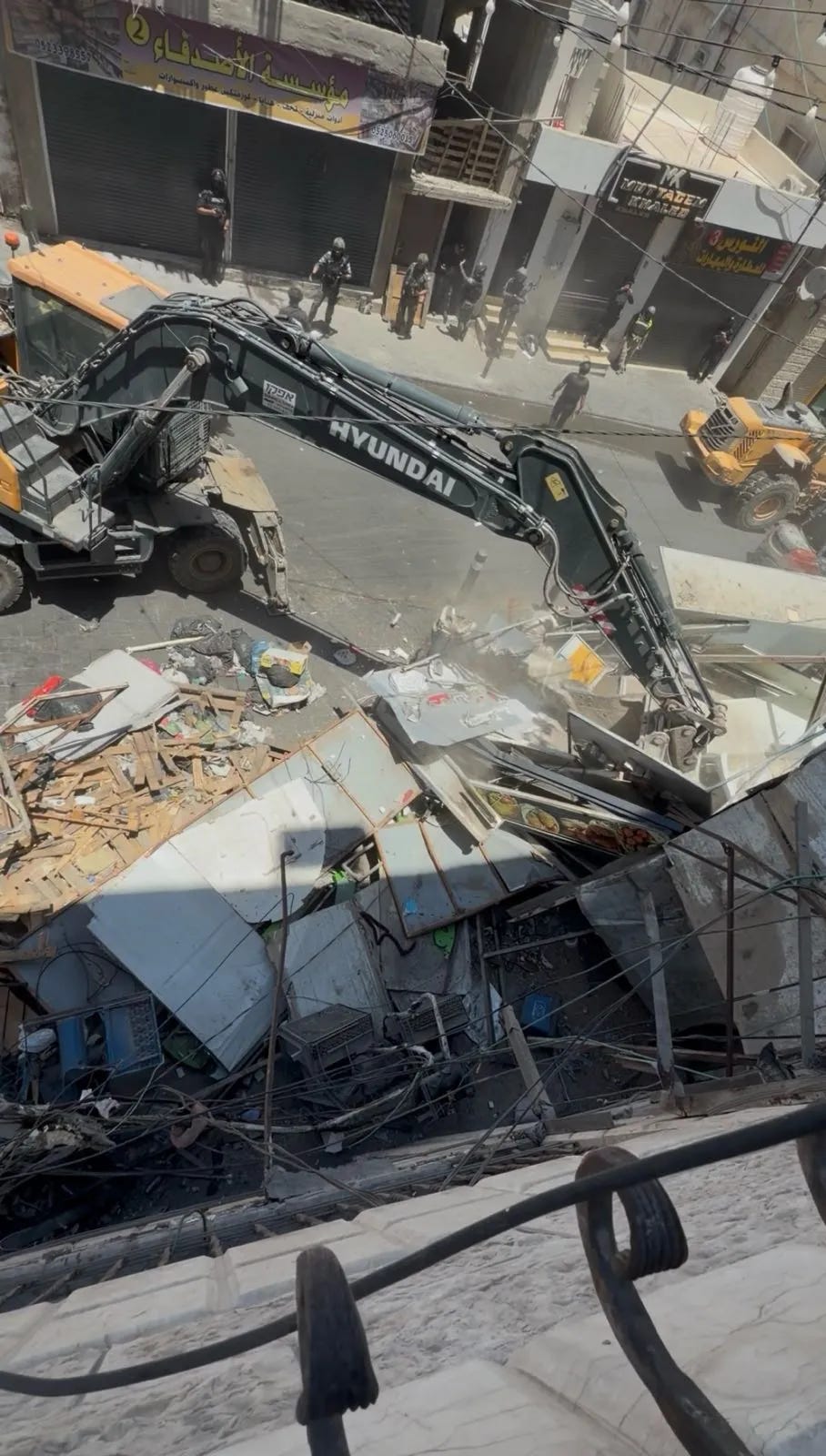
Shu’fat Camp, Jerusalem (June 23, 2026): Twelve commercial structures in Shu’fat refugee camp were demolished without prior notice, and the shutters of roughly 100 more shops were destroyed, with the municipality citing a lack of permits.
Killed this week

Issa Arafat Ismail Awad, 19, Hebron — June 22, 2026. Shot dead by Israeli forces near the Karmei Tzur settlement on the lands of Beit Ummar, north of Hebron; his body was stolen and withheld by Israeli forces.

Rida Sami Hassan Awad, 15, Hebron — June 22, 2026. Killed in the same shooting near Karmei Tzur on the lands of Beit Ummar; his body was stolen and withheld by Israeli forces.

Muhammad Nazim Izzat Zayed, 28, Al Yamun, Jenin — June 24, 2026. Shot by undercover Israeli forces who surrounded a house in the town. Medics were kept from reaching him, and he later died of his wounds. His body was also stolen by Israeli forces and is being withheld.

Mustafa Taha Mustafa Khatib, 31, Sarta, Salfit — June 25, 2026. Shot at his door during a dawn raid on the village of Sarta, west of Salfit.
2026 year-to-date
Home demolitions: 237 incidents, 750 structures destroyed, 1,082 people displaced (489 children), through June 23, 2026.
Arrests: 4,640 arrests recorded across 173 daily reports.
Settler attacks: 1,476 attacks year-to-date.
Martyrs: 67 killed year-to-date, through June 26, 2026.